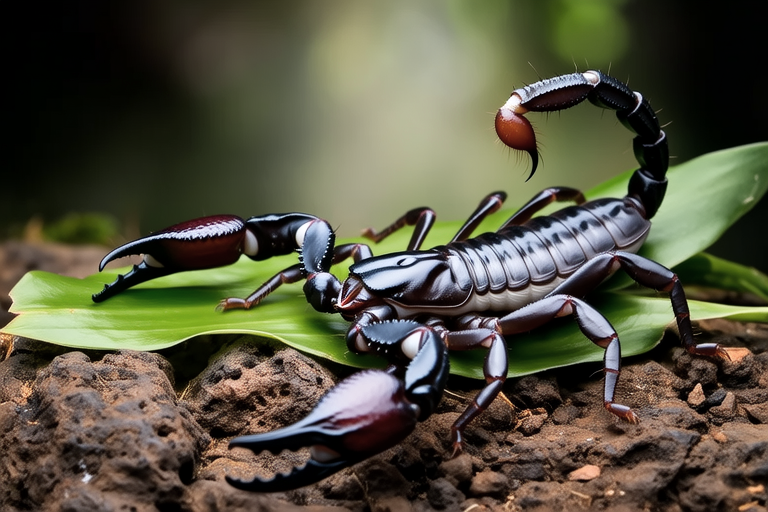
Heterometrus Spinifer: A Unique Scorpion Species
The world of scorpions is vast and diverse, with over 2,000 known species across the globe. Among these, Heterometrus spinifer stands out due to its unique characteristics, behaviors, and defensive mechanisms. This article delves into the intricacies of this fascinating creature, exploring its physical attributes, habitat, behavior, lesser-known facts, and comparing it with other scorpions. Additionally, we will touch upon myths surrounding the species and recent scientific discoveries or conservation efforts.
Physical Armor and Defensive Mechanisms
Heterometrus spinifer, commonly known as the Asian forest scorpion, is characterized by its robust exoskeleton that serves as an effective defense mechanism against predators. The exoskeleton, made up of chitin, is not only hard but also flexible, allowing the scorpion to move efficiently while providing protection from physical harm. This armor is further reinforced by a series of spines located along its tail, which can be raised when threatened, making it appear more formidable to potential attackers.
The most distinctive feature of H. spinifer is its tail, which ends in a large venomous stinger. While the stinger is primarily used for defense, it can also be employed to subdue prey. The venom contains neurotoxins that can cause pain, numbness, and muscle spasms in humans, though it is generally not life-threatening unless the victim has an allergic reaction. In comparison to other scorpions, such as the deathstalker (Leiurus quinquestriatus) or the emperor scorpion (Pandinus imperator), the venom of H. spinifer is less potent, making it relatively safer for human interaction.
Habitat and Behavior
Native to Southeast Asia, specifically countries like Thailand, Malaysia, and Indonesia, H. spinifer thrives in tropical rainforests, where it finds ample cover among fallen leaves, rocks, and tree trunks. These environments provide ideal conditions for hunting and hiding from predators. Unlike many desert-dwelling scorpions, which are nocturnal, H. spinifer is crepuscular, meaning it is most active during twilight hours. This behavioral adaptation helps them avoid the intense heat of the day and the cold of the night.
Scorpions are solitary creatures, and H. spinifer is no exception. They spend most of their lives alone, coming together only during mating season. Males engage in a complex courtship ritual involving a dance-like behavior known as the ‘promenade à deux,’ where they grasp each other’s claws and perform a series of movements. After successful mating, females carry their offspring on their backs until they molt for the first time, ensuring their safety during this vulnerable period.
Lesser-Known Facts
One lesser-known fact about H. spinifer is its ability to survive underwater for extended periods. Although not amphibious, this scorpion can hold its breath for up to two hours, allowing it to escape predators or find new habitats by crossing small bodies of water. Another interesting aspect is its diet, which primarily consists of insects, spiders, and even small vertebrates like frogs. Their hunting strategy involves ambushing prey using their powerful pincers and stinging them with their venomous tail.
Moreover, H. spinifer exhibits a remarkable ability to regenerate lost limbs. If a predator manages to sever one of its legs or pincers, the scorpion can regrow the appendage over several molting cycles. This regeneration process is crucial for survival, as it allows the scorpion to regain full functionality and continue its daily activities without significant impairment.
Myths Surrounding Heterometrus Spinifer
Like many other scorpions, H. spinifer has been surrounded by myths and misconceptions throughout history. One common myth is that all scorpions glow under ultraviolet light due to a chemical called beta-carboline present in their exoskeletons. While it is true that some scorpions emit a fluorescent greenish-blue light when exposed to UV light, this phenomenon does not occur universally across all species. In the case of H. spinifer, fluorescence is limited and may not be visible under certain conditions.
Another myth is that scorpions are aggressive and always ready to sting. In reality, scorpions prefer to avoid confrontation and will only resort to stinging if they feel threatened or cornered. Their primary goal is to conserve energy and avoid unnecessary risks, especially since their venom takes time and resources to produce.
Comparison with Other Scorpions
When compared to other scorpion species, H. spinifer exhibits both similarities and differences. For instance, the emperor scorpion (Pandinus imperator) shares similar physical features, including a robust exoskeleton and venomous stinger. However, the emperor scorpion is larger in size and has a more docile temperament, often kept as pets due to its gentle nature. In contrast, H. spinifer is more elusive and prefers to remain hidden, making it less suitable for captivity.
The bark scorpion (Centruroides sculpturatus) is another notable species, known for its highly potent venom. While the bark scorpion’s venom can be dangerous to humans, particularly children and the elderly, the venom of H. spinifer is less toxic. This difference highlights the varying degrees of danger posed by different scorpion species and underscores the importance of understanding local wildlife before venturing into unfamiliar territories.
Recent Scientific Discoveries and Conservation Efforts
In recent years, scientists have made significant strides in understanding the biology and ecology of H. spinifer. Researchers have discovered that the scorpion’s venom contains a variety of bioactive compounds with potential medical applications. These compounds show promise in treating conditions such as chronic pain, epilepsy, and certain types of cancer. By studying the venom’s composition and effects, researchers hope to develop new drugs that could improve patient outcomes and reduce side effects associated with current treatments.
Conservation efforts for H. spinifer are also gaining momentum, driven by concerns over habitat loss and fragmentation. As tropical rainforests face increasing pressures from deforestation and urbanization, the survival of many species, including H. spinifer, is at risk. Organizations and governments are working together to establish protected areas and promote sustainable land-use practices that preserve critical habitats while supporting local communities.
Additionally, public awareness campaigns are being launched to educate people about the importance of scorpions in ecosystems and dispel common myths. By fostering a greater appreciation for these misunderstood creatures, we can encourage more responsible attitudes towards wildlife conservation and reduce unnecessary fear and hostility towards scorpions.
Conclusion
In conclusion, Heterometrus spinifer is a remarkable species with unique characteristics, behaviors, and defensive mechanisms that set it apart from other scorpions. From its robust exoskeleton to its ability to regenerate lost limbs, this scorpion showcases the incredible adaptability of nature. By learning more about H. spinifer and its role in ecosystems, we can better appreciate the diversity of life on our planet and work towards preserving it for future generations.
