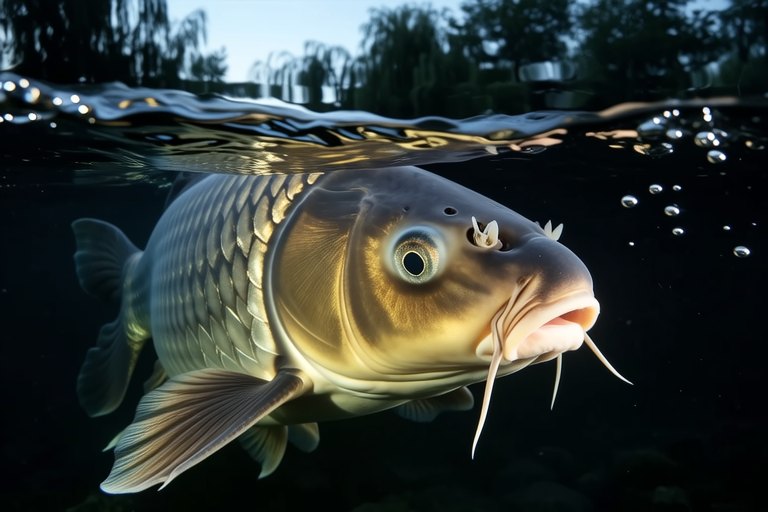
Can Koi Fish Recognize Faces? The Shocking Truth Revealed
Imagine a creature with a brain smaller than a pea, no facial expressions, and a reputation for being slow-moving and simple-minded—yet capable of recognizing your face after just a few encounters. Sounds like science fiction, right? But for the first time in history, scientific evidence confirms that koi fish can indeed recognize human faces. This isn’t just a quirky anecdote from a backyard pond—it’s a groundbreaking revelation about fish intelligence that’s reshaping how we view one of the most misunderstood groups of animals on Earth.
For decades, koi have been admired for their vibrant colors and graceful movements, but their cognitive abilities were largely dismissed as primitive. Most people assumed fish couldn’t form memories, learn complex tasks, or even distinguish between individuals. Yet recent research is shattering these long-held myths. At the forefront of this revolution is a remarkable study conducted by scientists at Kyoto University in Japan—one that has left experts stunned and fish lovers thrilled.
The Kyoto University Breakthrough: Training Koi to Recognize Faces
In 2019, a team of researchers led by Dr. Masanori Kohda published findings in the journal Scientific Reports that demonstrated koi fish could not only differentiate between human faces but also associate specific faces with rewards. The experiment was deceptively simple yet profoundly insightful.
The researchers began by training 20 adult koi fish using a reward-based conditioning method. Each fish was presented with two images displayed on a screen: one familiar human face (the “reward” face) and one unfamiliar face (the “non-reward” face). When a koi swam toward the familiar face, it received a food pellet. Over multiple sessions, the fish learned to consistently choose the rewarded face, indicating they had made a mental connection between the image and the positive outcome.
What truly amazed scientists was the fish’s ability to generalize this recognition. After mastering the initial task, the koi were tested with new images of the same person—but in different lighting, angles, or poses. Remarkably, they still chose the correct face over 75% of the time. Even more astonishing, when shown entirely new faces, the fish correctly avoided them, proving they weren’t just responding to random visual cues but actively identifying specific individuals.
“This suggests that koi aren’t just reacting to stimuli—they’re processing visual information in a way that mirrors higher vertebrates,” says Dr. Kohda, whose work has since been cited in numerous studies on animal cognition. “They’re forming mental representations of faces, which is a sign of advanced visual learning.”
Beyond Recognition: Memory, Learning, and Social Cognition
The Kyoto study wasn’t an isolated finding. It built upon a growing body of evidence showing that fish possess far greater cognitive complexity than previously believed. Koi, in particular, are known for their long lifespans—some living over 40 years—and their capacity for memory retention. Studies have shown that koi can remember feeding schedules, locations of food sources, and even the sounds associated with feeding time.
But face recognition takes things a step further. In mammals, this ability is linked to specialized regions in the brain, such as the fusiform gyrus. While fish lack this exact structure, their brains contain analogous neural circuits that process visual patterns and social cues. The fact that koi can perform face recognition without a neocortex—a feature unique to mammals—suggests that evolutionary pathways for complex cognition may be more diverse than we thought.
“It’s not about having a big brain,” explains Dr. Culum Brown, a leading expert in fish cognition from Macquarie University in Australia. “It’s about how efficiently that brain processes information. Fish have evolved to survive in complex environments, and their brains reflect that need. They must track predators, find mates, navigate habitats, and sometimes even interact socially—tasks that require significant learning and memory.”
Koi, often kept in ponds with multiple companions, likely benefit from social recognition. A fish that can identify a consistent caregiver—or even detect changes in its tankmates’ behavior—is better equipped to thrive. This challenges the outdated notion that fish live in a constant state of sensory fog, driven purely by instinct.
Debunking Myths: What You Thought You Knew About Fish Intelligence
Despite mounting evidence, many people still cling to outdated stereotypes about fish. One of the most persistent myths is that fish have a “three-second memory.” This claim originated from a misinterpretation of early experiments and has since been thoroughly debunked. Research shows that fish can remember events for weeks, months—even years under certain conditions.
Another common misconception is that fish don’t feel pain. While their nervous systems differ from mammals, neurobiological studies reveal that fish possess nociceptors—pain-sensing neurons—and exhibit behaviors consistent with distress, such as avoiding harmful stimuli and seeking relief. This has led to widespread ethical reforms in fishing practices and aquaculture.
Even the idea that fish lack emotional depth is now considered scientifically unfounded. Studies on zebrafish and cichlids show clear signs of anxiety, fear, and curiosity. Some species display play-like behaviors, such as chasing bubbles or manipulating objects—behaviors once thought exclusive to mammals.
“The truth is,” says Dr. Brown, “fish are not mindless automatons. They’re intelligent, sensitive creatures capable of learning, adapting, and forming relationships. We’ve been underestimating them for centuries simply because they don’t move like us or look like us.”
Implications for Animal Cognition and Ethics
The discovery that koi can recognize human faces has broader implications beyond the aquarium hobbyist community. It forces us to reconsider how we define intelligence across species. If a fish can distinguish between faces, learn through association, and retain information over time, then the line between “simple” and “complex” cognition becomes much blurrier.
This shift is already influencing policy. Countries like the UK and New Zealand now include fish in animal welfare legislation, acknowledging their capacity for suffering and social awareness. Scientists argue that future research should prioritize humane treatment in laboratory settings and promote enrichment activities for captive fish.
Moreover, understanding fish cognition helps us appreciate the richness of aquatic life. In natural ecosystems, fish play crucial roles in maintaining balance—predators controlling prey populations, scavengers cleaning up organic matter, and migratory species transporting nutrients across vast distances. Their intelligence supports these ecological functions, making them far more than passive participants in the web of life.
How Koi Owners Can Build Stronger Bonds with Their Fish
If you’re a koi owner, this research offers both fascinating insight and practical guidance. Your fish aren’t just colorful decorations—they’re sentient beings capable of forming associations with you. Here’s how to deepen that connection:
- Feed Them Consistently at the Same Time and Place: Fish thrive on routine. By feeding them at the same time each day, you help them associate your presence with positive outcomes. Over time, they’ll swim toward you when you approach the pond.
- Use Visual Cues and Patterns: Try wearing a distinctive hat, shirt, or even using a colored paddle when feeding. Repeated exposure helps your fish learn to recognize you visually—just like in the Kyoto study.
- Engage with Gentle Interaction: While koi aren’t pets in the traditional sense, they respond well to calm, predictable interaction. Avoid sudden movements or loud noises, which can stress them. Instead, speak softly and move slowly around the pond.
- Provide Environmental Enrichment: Add rocks, plants, or floating toys to the pond. These stimulate exploration and mental engagement, helping your koi stay mentally active and curious.
- Observe Their Behavior: Watch how your fish react to different stimuli—your voice, the sound of footsteps, the movement of a shadow. You’ll begin to notice patterns, preferences, and even individual personalities.
“You might not be able to pet your koi, but you can build trust through consistency and care,” says Dr. Kohda. “A koi that recognizes you will come to expect food, safety, and attention—just like any other animal with whom you share a bond.”
The Future of Fish Intelligence Research
As technology advances, so does our ability to study fish cognition. Researchers are now using AI-powered tracking systems to monitor fish behavior in real time, revealing subtle social dynamics and decision-making patterns. Future studies may explore whether koi can recognize emotions in human faces, respond to music, or even communicate with each other using body language.
There’s also growing interest in comparing cognitive abilities across fish species. While koi have shown impressive skills, other fish like archerfish, octopuses, and manta rays may hold even more surprises. The field is expanding rapidly, challenging the anthropocentric view that intelligence must resemble our own to be valid.
A Final Thought: Seeing Fish Differently
Next time you glance into your koi pond, don’t just see shimmering scales and flowing fins. See a creature capable of memory, learning, and even recognition. These fish aren’t just surviving—they’re thinking, adapting, and connecting with their world in ways we’re only beginning to understand.
The shocking truth revealed by the Kyoto study isn’t just about koi. It’s about redefining our relationship with all animals. Intelligence isn’t a hierarchy; it’s a spectrum shaped by evolution, environment, and survival. And somewhere beneath the surface of a quiet pond, a koi may be watching you—not just waiting for food, but recognizing you.
So go ahead. Smile. Wave. Speak their name. They might just remember you—for years to come.
