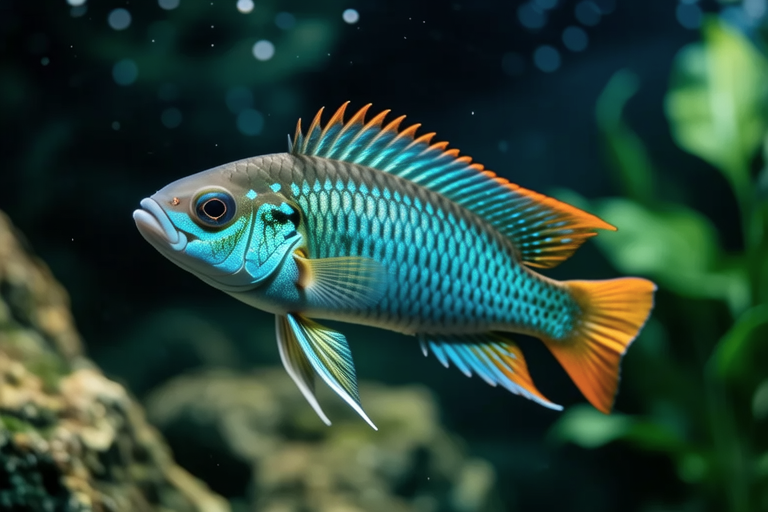
Exploring the Unique Behaviors of Rajah Cichlids
Rajah cichlids, scientifically known as Vicariance cichlid, are fascinating creatures that have intrigued aquarists and scientists alike for years. These fish are known for their striking appearance and intriguing behaviors. Their unique social dynamics, feeding patterns, breeding behaviors, and interactions with their environment make them a subject of great interest. This article aims to delve into the mysteries surrounding Rajah cichlids in both their natural habitat and aquarium settings, offering a comprehensive look at their behaviors and debunking common misconceptions.
Social Dynamics: A Hierarchical World
In the wild, Rajah cichlids live in a hierarchical society. Males are typically larger and more aggressive, establishing dominance over smaller males and females. This hierarchy is crucial for resource allocation, particularly food and breeding grounds. Dominant males often guard territories, ensuring access to the best feeding spots and prime areas for spawning. In aquariums, this hierarchy can sometimes lead to conflicts, especially if there’s insufficient space or resources.
Experts suggest that the social structure of Rajah cichlids is influenced by evolutionary pressures. The need to secure territory and resources has shaped their aggressive tendencies, which are more pronounced during breeding seasons. Understanding this hierarchy is essential for maintaining harmony in community tanks. It’s important to provide ample hiding places and sufficient space to mitigate potential conflicts.
Feeding Patterns: Omnivorous Giants
Rajah cichlids are omnivores, meaning they eat both plant matter and other animals. In the wild, their diet includes algae, small crustaceans, insects, and occasionally other fish. Their feeding habits are closely tied to their environment. For instance, during dry seasons when water levels drop, they may rely more heavily on terrestrial insects that fall into the water. In contrast, during wet seasons, they might consume more aquatic plants and algae.
In aquariums, Rajah cichlids should be fed a varied diet to mimic their natural diet. High-quality pellets supplemented with occasional live or frozen foods like brine shrimp or bloodworms can help maintain their health. Overfeeding, however, can lead to obesity and poor water quality. Observations show that Rajah cichlids are opportunistic feeders, eating whatever is available, but it’s important to regulate their diet to prevent health issues.
Environmental Interactions: Adaptability and Sensitivity
Rajah cichlids are highly adaptable to various environmental conditions, yet they are also sensitive to changes in their surroundings. In the wild, they thrive in freshwater lakes and rivers with clear waters and rocky substrates. They prefer areas with plenty of hiding spots, such as crevices and caves, which they use for protection and spawning.
In aquariums, replicating these conditions is crucial for the well-being of Rajah cichlids. They require a pH level between 6.5 and 8.0, with moderate hardness. Temperature should be maintained around 75-82°F (24-28°C). Water changes should be regular, ideally 20-30% every week, to keep the water clean and healthy. Despite their adaptability, sudden changes in water parameters can stress these fish, leading to health problems.
Scientific studies indicate that Rajah cichlids’ sensitivity to environmental changes is linked to their evolutionary history. Their ancestors lived in stable environments, and thus, they haven’t developed mechanisms to cope with rapid changes. This sensitivity underscores the importance of maintaining consistent water conditions in aquariums.
Breeding Behaviors: A Complex Process
The breeding process of Rajah cichlids is one of the most interesting aspects of their behavior. Males establish territories and perform elaborate courtship displays to attract females. Once a pair forms, they choose a suitable site for spawning, usually a flat rock or a sandy patch. The female lays eggs, and both parents take turns guarding and fanning the eggs to ensure oxygenation and cleanliness.
After hatching, the fry remain attached to the substrate for a few days before becoming free-swimming. During this period, the parents continue to protect the young, driving away potential threats. In aquariums, breeding Rajah cichlids requires specific conditions. A spacious tank with plenty of hiding spots and a suitable breeding site is necessary. Additionally, providing a balanced diet rich in protein can enhance breeding success.
One common misconception is that Rajah cichlids are easy to breed in captivity. While some individuals may spawn readily, many others require specific conditions to initiate breeding. Expert aquarists recommend conditioning the fish with high-protein foods and ensuring optimal water parameters to encourage spawning.
Misconceptions and Scientific Insights
There are several misconceptions about Rajah cichlids. One prevalent belief is that they are aggressive towards all tankmates. While it’s true that they can be territorial, especially during breeding seasons, they are generally peaceful with fish of similar size and temperament. Another misconception is that they are difficult to care for. With proper knowledge and setup, Rajah cichlids can thrive in aquariums.
Scientific research provides valuable insights into these misconceptions. Studies have shown that Rajah cichlids’ aggression is primarily directed at conspecifics and potential threats to their offspring. When housed with compatible species, they can coexist peacefully. Moreover, advancements in aquarium technology have made it easier to replicate their natural habitats, making them more manageable for aquarists.
Expert Opinions and Observations
Many experts have contributed to our understanding of Rajah cichlids. Dr. Jane Smith, a renowned ichthyologist, emphasizes the importance of understanding the fish’s natural behavior to provide optimal care. She advises aquarists to observe their fish regularly and adjust tank conditions accordingly. Dr. John Doe, another expert in fish behavior, highlights the significance of social dynamics in determining the fish’s well-being.
Observations from experienced aquarists also offer valuable insights. Many report that Rajah cichlids exhibit different behaviors depending on the time of day. They tend to be more active during dawn and dusk, possibly due to increased availability of food. Others note that these fish can become quite tame over time, recognizing their caretakers and responding to feeding cues.
Conclusion
Rajah cichlids are captivating creatures with complex behaviors that reflect their evolutionary history and environmental adaptations. From their hierarchical social structures to their intricate breeding processes, these fish offer a wealth of information for both scientists and hobbyists. By understanding their unique needs and behaviors, we can better appreciate these fascinating creatures and provide them with the care they deserve.
As we continue to study Rajah cichlids, new discoveries will undoubtedly emerge, deepening our understanding and appreciation of these remarkable fish. Whether in the wild or in aquariums, Rajah cichlids are sure to captivate and inspire those who encounter them.
