Unraveling the Mysteries of Heterometrus Spinifer: The Prickly Yet Intriguing Scorpion Species
In the vast and diverse world of arachnids, one species stands out with its unique blend of resilience and mystery – the Heterometrus spinifer. This fascinating scorpion species, known for its distinctive appearance and intriguing behaviors, offers a window into the complex lives of these often misunderstood creatures.
Unique Characteristics of Heterometrus Spinifer
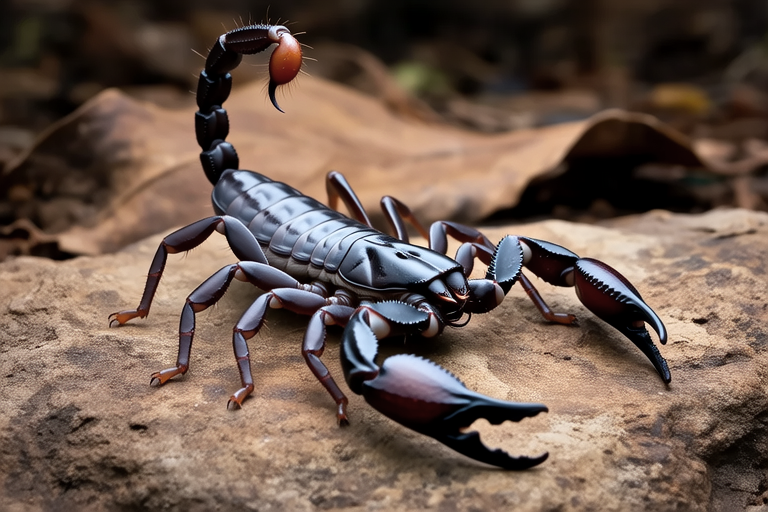
The Heterometrus spinifer is a medium-sized scorpion, typically reaching lengths between 6 to 9 centimeters. Its most striking feature is the series of pronounced spines along its tail, which give it its name. These spines are not only visually impressive but also serve as a defense mechanism, helping the scorpion fend off predators. The coloration of Heterometrus spinifer ranges from a dark brown to a reddish hue, providing excellent camouflage in its natural habitat.
Natural Habitat and Geographic Distribution
Heterometrus spinifer thrives in tropical and subtropical regions, particularly in Southeast Asia. It is commonly found in areas with dense vegetation, such as rainforests and bamboo thickets. The species prefers humid environments with plenty of hiding spots, making it well-suited to life among the leaf litter and under rocks. Its geographic distribution spans across countries like India, Malaysia, Thailand, and parts of Indonesia.
Behavior and Lifestyle
The hunting techniques of Heterometrus spinifer are both efficient and stealthy. As nocturnal predators, they rely on their exceptional sensory abilities to locate prey. Their pincers are used to grasp and immobilize small insects, while their venomous stinger delivers a paralyzing blow. Despite being solitary hunters, there have been observations of Heterometrus spinifer individuals sharing dens, suggesting a degree of social tolerance. Their diet primarily consists of insects, though larger specimens may occasionally take down small vertebrates.
Misconceptions About Scorpions
One common misconception about scorpions, including Heterometrus spinifer, is that they are universally deadly. In reality, while their sting can be painful and cause localized swelling, only a few species possess venom potent enough to be lethal to humans. For Heterometrus spinifer, the venom is more of a deterrent than a weapon. Another myth is that scorpions glow under ultraviolet light because they are dangerous; in fact, all scorpions exhibit this trait due to the presence of a fluorescent substance in their exoskeletons, unrelated to their toxicity.
Recent Scientific Findings
Recent studies have shed light on the adaptive strategies of Heterometrus spinifer. Researchers have discovered that the species has evolved to thrive in environments with fluctuating humidity levels, thanks to specialized physiological adaptations. Genetic analysis is also revealing insights into the evolutionary history of the species, potentially leading to new understandings of scorpion diversity.
The Importance of Studying Heterometrus Spinifer
The study of Heterometrus spinifer is crucial for understanding the broader ecosystem. As a key predator in its habitat, it plays a vital role in controlling insect populations. Moreover, the species’ resilience and adaptability offer valuable lessons for conservation efforts. By unraveling the mysteries of Heterometrus spinifer, we gain a deeper appreciation for the intricate web of life that sustains our planet.
In conclusion, Heterometrus spinifer is a remarkable species that challenges our preconceived notions about scorpions. Its unique physical attributes, behaviors, and ecological roles make it a subject of fascination for scientists and nature enthusiasts alike. By continuing to explore and appreciate these creatures, we contribute to the preservation of biodiversity and ecological balance.
