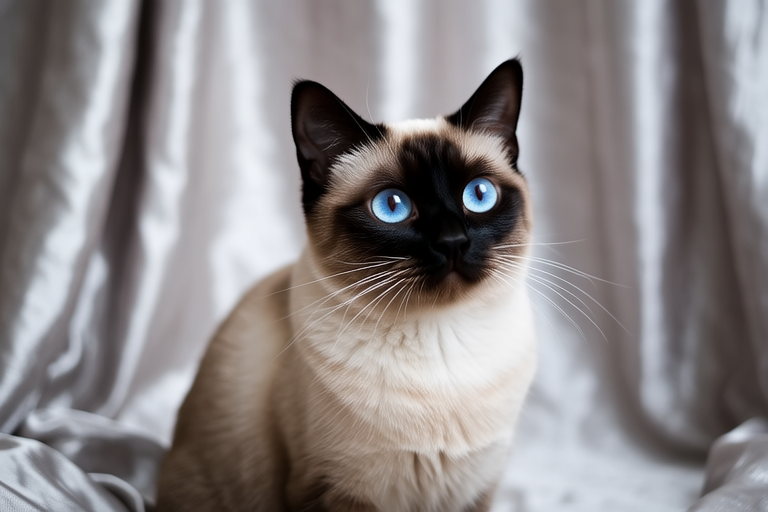
Genetic Factors Behind Siamese Cats’ Blue Eyes
The striking blue eyes of Siamese cats are one of the most distinctive features of this breed. This article delves into the genetic factors contributing to this characteristic, exploring how their unique coat patterns relate to their eye color. It also provides a historical background on Siamese cats, dispels common myths about their blue eyes, and explains the role of temperature in eye color development. Additionally, it compares Siamese cats with other breeds that have blue eyes, offering scientific insights about albino genes and their influence on both eye color and light sensitivity. Finally, it concludes with the latest research findings and ongoing studies regarding the genetics behind these captivating blue eyes.
Historical Background and Myths Surrounding Siamese Cats’ Blue Eyes
The Siamese cat is an ancient breed, originating from Thailand (formerly Siam). The breed has been mentioned in literature as early as the 14th century, often associated with royalty and temples. In Thai folklore, Siamese cats were believed to be reincarnations of royalty or guardians of sacred temples. One popular myth was that the king would place a ring on the cat’s tail, and the cat would then guard it until the king returned. While there is no historical evidence supporting this, it underscores the revered status of Siamese cats in Thai culture.
Another myth involves the Siamese cat’s blue eyes. Some believe that the blue eyes result from the cat being born blind and then regaining sight after several weeks. However, this is scientifically inaccurate. The true reason for their blue eyes lies in genetics and temperature-dependent pigmentation.
Role of Temperature on Eye Color Development Specific to Siamese Cats
The unique coat pattern of Siamese cats, known as point coloration, is caused by a mutation in the tyrosinase gene, which affects melanin production. Melanin is responsible for pigmentation in skin, hair, and eyes. In cooler parts of the body, such as the extremities (ears, paws, tail, and face), the enzyme tyrosinase functions more efficiently, leading to darker pigmentation. Conversely, in warmer areas like the torso, less melanin is produced, resulting in lighter fur.
This temperature-sensitive pigmentation also influences eye color. The iris contains cells called melanocytes, which produce melanin. In warmer regions of the body, such as around the eyes, less melanin is produced, leading to lighter-colored irises, typically blue. This phenomenon is known as partial albinism or hypopigmentation. The cooler parts of the body, including the ears and tail, exhibit darker pigmentation, contrasting sharply with the lighter-colored body.
Scientific Insights About Albino Genes and Their Influence on Eye Color and Light Sensitivity
The albino gene, also known as the cchc allele, plays a crucial role in determining the eye color of Siamese cats. This gene reduces the amount of melanin produced in the body, leading to light-colored coats and blue eyes. However, unlike true albinos, Siamese cats retain some pigmentation in cooler areas due to the temperature-sensitive nature of the tyrosinase mutation.
The reduced amount of melanin in the eyes can make Siamese cats more sensitive to light. Melanin acts as a natural sunscreen for the eyes, protecting them from harmful ultraviolet rays. With less melanin, Siamese cats may experience discomfort when exposed to bright lights. Owners should provide their cats with access to shaded areas and consider using window treatments to reduce glare.
Comparisons with Other Cat Breeds That Have Blue Eyes
Several other cat breeds have blue eyes, including the Turkish Van, Russian Blue, and Balinese. However, each breed has its own unique genetic makeup and characteristics.
- Turkish Van: Known for its semi-longhair coat and white markings, the Turkish Van often has blue eyes due to the piebald gene, which reduces pigmentation in certain areas. Unlike Siamese cats, the Turkish Van does not exhibit point coloration.
- Russian Blue: This breed has a dense, short, silvery-blue coat and greenish-gray eyes. While some Russian Blues may have blue eyes, it is not as common as in Siamese cats. The blue eyes in Russian Blues are typically a result of dilution genes rather than temperature-sensitive pigmentation.
- Balinese: A long-haired variant of the Siamese, Balinese cats inherit the same point coloration and blue eyes. They share the same genetic traits as Siamese cats, including the temperature-sensitive pigmentation and partial albinism.
What sets Siamese cats apart is their distinct coat pattern and the interplay between temperature and pigmentation. While other breeds may have blue eyes, the combination of point coloration and the striking contrast between the darker points and lighter body is unique to Siamese cats.
Latest Research Findings and Ongoing Studies About the Genetics Behind These Captivating Blue Eyes
Recent studies have shed light on the genetic mechanisms underlying the blue eyes and point coloration in Siamese cats. Researchers have identified specific mutations in the TYR gene, which encodes the tyrosinase enzyme responsible for melanin production. These mutations affect the enzyme’s activity at different temperatures, explaining why melanin production is higher in cooler areas of the body.
Ongoing research aims to further elucidate the genetic basis of these traits and explore potential applications in veterinary medicine. Understanding the genetic factors behind the blue eyes and point coloration could lead to advancements in treating related health issues, such as ocular diseases and pigmentation disorders. Additionally, researchers are investigating the role of other genes and environmental factors in shaping the unique characteristics of Siamese cats.
In conclusion, the striking blue eyes of Siamese cats are the result of a complex interplay of genetic and environmental factors. From their revered status in Thai culture to their captivating appearance, Siamese cats continue to fascinate cat enthusiasts worldwide. As research progresses, we may uncover even more about the fascinating genetics behind these captivating blue eyes.
