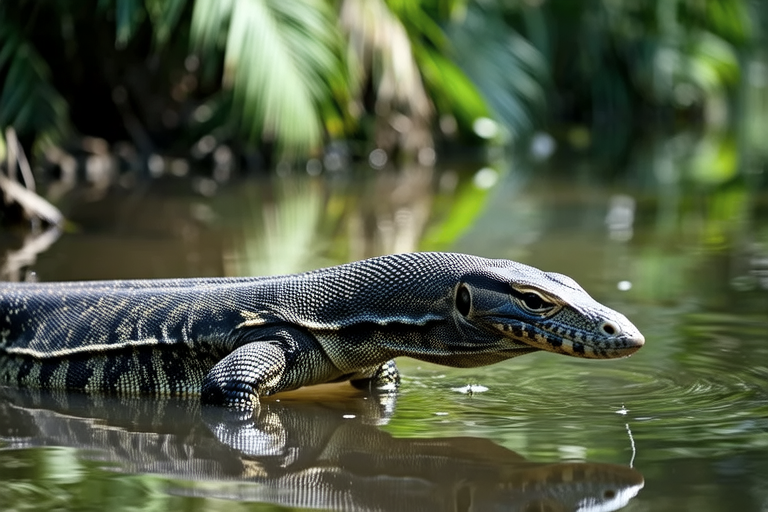
The Thrilling Life of a Water Monitor: From Jungles to Rivers
In the heart of Southeast Asia’s lush landscapes, there exists a creature that epitomizes the adventurous spirit of the wild. The water monitor (Varanus salvator) is a reptile of remarkable proportions and resilience, navigating from dense jungles to wide rivers with an elegance that belies its formidable nature. This article delves into the fascinating world of the water monitor, exploring its habitat, behavior, diet, and unique adaptations. We will uncover the challenges it faces in its natural environment and shed light on the conservation efforts underway to protect this magnificent creature.
A Habitat Spanning Continents
The water monitor thrives in diverse habitats ranging from mangrove swamps to freshwater rivers, and even urban areas where human settlements have encroached upon its territory. These adaptable reptiles are most commonly found in Southeast Asia, including countries like Indonesia, Malaysia, Thailand, and parts of India. Their preferred environments are characterized by dense vegetation, abundant water sources, and a variety of prey. In these settings, water monitors can reach impressive sizes, with some individuals growing up to three meters in length. Their powerful limbs and muscular bodies enable them to traverse both terrestrial and aquatic realms with ease.
Despite their broad distribution, water monitors face significant threats due to habitat destruction and overexploitation. As human populations expand and deforestation continues, the availability of suitable habitats diminishes. Consequently, many water monitors find themselves competing with humans for space, leading to increased encounters between the two species.
A Life of Constant Motion
Water monitors are known for their energetic and dynamic lifestyle. They are diurnal creatures, meaning they are most active during the day. Their daily routine involves extensive foraging, basking in the sun to regulate body temperature, and seeking shelter at nightfall. One of the most striking aspects of their behavior is their ability to move seamlessly between land and water. When swimming, they employ a sinuous motion, propelling themselves through the water with powerful tail strokes. On land, their agile movements allow them to quickly escape predators or chase down prey.
Communication among water monitors is primarily non-verbal. They rely on chemical signals, body posture, and visual displays to convey messages. For instance, when threatened, water monitors may hiss loudly or flatten their bodies to appear larger and more intimidating. Males also engage in elaborate displays during the breeding season to attract females. These behaviors highlight the complexity of their social interactions and the importance of communication in their survival.
Feasting on the Fruits of the Jungle
The diet of a water monitor is as varied as its habitat. They are opportunistic feeders, consuming anything from insects and small mammals to fish and carrion. Their sharp teeth and strong jaws make short work of tough prey items, while their keen sense of smell helps them locate food sources. In addition to hunting live prey, water monitors are adept scavengers, often feeding on dead animals left behind by larger predators. This dietary flexibility allows them to thrive in a wide range of environments.
One of the most interesting aspects of their feeding habits is their ability to detect vibrations in the ground. This enables them to locate hidden prey, such as rodents burrowing underground. Their long, forked tongues further enhance their sensory capabilities, allowing them to taste the air and pick up chemical cues from potential meals.
Adaptations for Survival
Water monitors possess several unique adaptations that have enabled them to survive in challenging environments. Their streamlined bodies and webbed feet make them efficient swimmers, capable of diving to depths of over five meters. Additionally, they have a highly developed sense of smell, which aids in detecting prey or potential mates. Another notable adaptation is their ability to remain submerged for extended periods, thanks to a specialized respiratory system that allows them to extract oxygen from the water.
Perhaps one of the most intriguing adaptations of the water monitor is its ability to autotomize its tail. In cases of extreme danger, these lizards can voluntarily detach their tails to escape predators. While this may seem like a drastic measure, the lost appendage regenerates over time, ensuring the lizard’s continued survival.
A Lifespan of Adventure
Water monitors have relatively long lifespans compared to other reptiles, often living up to 15 years in the wild. However, their lifespan can be significantly shorter if they fall victim to predation or human activities. Despite these risks, water monitors continue to lead adventurous lives, constantly adapting to changing conditions in their environment.
During their lifetime, water monitors undergo several physical changes. Juveniles are smaller and more vulnerable than adults, relying heavily on camouflage and speed to avoid predators. As they mature, their bodies become more robust, and they develop the strength and agility necessary to take on larger prey. By the time they reach adulthood, water monitors are formidable predators, capable of dominating their ecosystem.
Challenges in the Wild
While water monitors are highly adaptable creatures, they face numerous challenges in their natural habitats. Habitat destruction, particularly deforestation and wetland drainage, has led to a decline in suitable environments for these reptiles. Additionally, they are often hunted for their skin, which is prized in the leather trade, and for their meat, which is considered a delicacy in some regions. Climate change poses another threat, as rising temperatures and altered precipitation patterns may disrupt the delicate balance of their ecosystems.
Despite these challenges, there are ongoing conservation efforts aimed at protecting water monitors and their habitats. Organizations and governments are working together to establish protected areas and promote sustainable practices that minimize human impact on the environment. Education programs are also being implemented to raise awareness about the importance of preserving these remarkable creatures and the ecosystems they inhabit.
Interactions with Other Species
Water monitors play a crucial role in maintaining the balance of their ecosystems. As apex predators, they help control populations of smaller animals, preventing overgrazing and promoting biodiversity. They also serve as indicators of environmental health, as declines in their numbers can signal broader issues within the ecosystem. Moreover, water monitors interact with other species in complex ways. For example, they have been observed coexisting with crocodiles, sharing similar habitats without conflict. In some instances, they even scavenge from kills made by larger predators.
These interactions highlight the intricate web of relationships that exists within ecosystems. By studying the behavior of water monitors and their interactions with other species, scientists can gain valuable insights into the functioning of these complex systems and develop strategies for their preservation.
Conclusion
The life of a water monitor is a testament to the resilience and adaptability of nature. From the dense jungles of Southeast Asia to the wide rivers that crisscross the landscape, these reptiles navigate their environments with grace and determination. Through their unique adaptations, diverse diet, and complex social behaviors, water monitors have carved out a niche for themselves in a world full of challenges. As we continue to learn more about these remarkable creatures, it becomes increasingly clear that their survival is intricately linked to the health of their ecosystems. By supporting conservation efforts and raising awareness about the importance of preserving these habitats, we can ensure that future generations will have the opportunity to witness the thrilling life of the water monitor firsthand.
