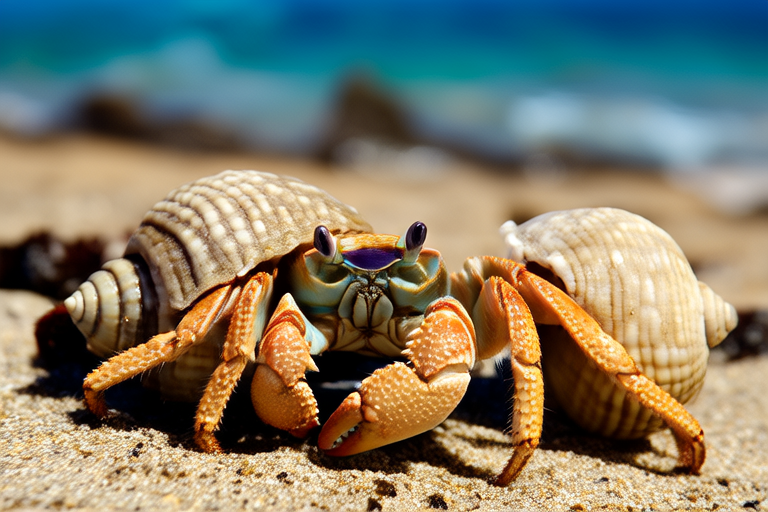
Hermit Crab: A Journey Beyond Human Observation
Hermit crabs are intriguing creatures that have captured the attention of many due to their unique lifestyle and behavior. While many people are familiar with hermit crabs as pets, there is much more to these animals than meets the eye. In this article, we will delve into the behaviors and secret activities of hermit crabs outside of human observation, exploring their natural habitats, interactions, shell-changing rituals, feeding habits, methods of communication, and nocturnal activities.
Natural Habitat Preferences
Hermit crabs are primarily found in coastal areas, such as beaches, mangroves, and coral reefs. They prefer environments rich in biodiversity and abundant in resources, which provide them with ample opportunities for finding new homes and food. These crabs can be found in both tropical and temperate regions, depending on the species. For instance, Pagurus bernhardus, commonly known as the common hermit crab, is native to the cold waters of the North Atlantic, while Clibanarius tricolor thrives in the warm waters of the Caribbean.
One of the most notable aspects of their habitat is their preference for areas where they can find a variety of shells. Hermit crabs require shells to protect their soft abdomens, and they are constantly searching for better accommodations as they grow. The availability of suitable shells is crucial for their survival, and they often gather in areas where shell debris accumulates, such as near rocky shores or coral reefs.
Interactions Within Their Communities
Hermit crabs are social creatures that live in close proximity to one another. Despite their solitary appearance, they form complex communities, interacting with each other in various ways. One of the most interesting aspects of their social behavior is their ability to cooperate when it comes to finding new shells. When a large shell becomes available, multiple hermit crabs may gather around it, forming a “shell train.” This is a chain of crabs, each holding onto the shell of the crab in front of it, all moving together toward the new home. This cooperative behavior ensures that the largest and most desirable shells are distributed fairly among the community.
In addition to cooperating during shell changes, hermit crabs also engage in other forms of social interaction. They communicate through a series of chemical signals and touch, which allows them to establish territories and maintain social hierarchies. These interactions play a crucial role in maintaining the stability of their communities and ensuring the survival of the group.
Unique Shell-Changing Rituals
The process of changing shells is one of the most distinctive behaviors of hermit crabs. It is a delicate and highly ritualized process that requires careful consideration and coordination. When a hermit crab outgrows its current shell, it begins the search for a new one. This involves exploring the area for potential candidates, assessing the size and condition of the shells, and ultimately selecting the best option available.
Once a suitable shell has been found, the hermit crab must carefully transition from its old home to the new one. This process involves removing itself from the old shell and positioning itself in the new one, all while ensuring that no predators take advantage of its vulnerability. The transition can take anywhere from a few seconds to several minutes, depending on the size of the crab and the complexity of the shell change.
Interestingly, hermit crabs are not the only ones who benefit from this process. Other species, such as sea anemones, sometimes attach themselves to the shells of hermit crabs. This symbiotic relationship provides protection for the anemone, while the crab benefits from the added camouflage and additional defense against predators.
Feeding Habits in the Wild
Hermit crabs are omnivorous, meaning they eat both plant and animal matter. In the wild, their diet consists of a wide range of organic material, including algae, dead fish, and decaying plant matter. They are opportunistic feeders, taking advantage of whatever food sources are available in their environment. This adaptability allows them to thrive in diverse ecosystems and ensures that they have access to the nutrients they need to survive.
One of the most fascinating aspects of their feeding habits is their ability to detect food sources through chemical signals. Hermit crabs have specialized organs called aesthetascs, which allow them to sense the presence of food in their surroundings. This ability enables them to locate food even in low-light conditions or when it is buried beneath the sand.
Methods of Communication
Hermit crabs rely on a combination of chemical signals, touch, and sound to communicate with one another. Chemical signals play a significant role in their social interactions, allowing them to establish territories and coordinate shell changes. These signals are produced by glands located on the crab’s antennae and are detected by receptors on the antennules of other crabs.
In addition to chemical signals, hermit crabs also use touch to communicate. They often engage in gentle touching and stroking behaviors, which serve to reinforce social bonds and reduce aggression within the community. Sound is another important mode of communication, although it is less well understood. Some species of hermit crabs are known to produce clicking sounds, which may serve as a form of warning or territorial defense.
Nocturnal Activities
Hermit crabs are primarily nocturnal creatures, meaning they are most active during the night. This behavior helps them avoid predation and competition for resources during the day. During the night, hermit crabs engage in a variety of activities, including foraging for food, exploring their surroundings, and engaging in social interactions.
One of the most interesting aspects of their nocturnal behavior is their ability to navigate in low-light conditions. Hermit crabs have adapted to their nocturnal lifestyle by developing enhanced sensory systems, allowing them to detect food and avoid obstacles even in the dark. This adaptation enables them to thrive in their nighttime environment and ensures that they have access to the resources they need to survive.
Environmental Impact
Hermit crabs play an important role in their ecosystems, contributing to nutrient cycling and habitat formation. By consuming dead plant and animal matter, they help break down organic material and return nutrients to the environment. This process is essential for maintaining the health and productivity of their ecosystems.
In addition to their role in nutrient cycling, hermit crabs also contribute to the formation of habitats for other species. By creating burrows and modifying the structure of their shells, they create microhabitats that provide shelter and breeding grounds for a variety of organisms. This contributes to the overall biodiversity of their ecosystems and ensures the survival of numerous species.
Lesser-Known Facts
There are many lesser-known facts about hermit crabs that reveal the complexity and diversity of their lives. For example, some species of hermit crabs are capable of growing their own calcium carbonate exoskeletons, which they use to protect their soft abdomens. This adaptation allows them to live without shells, but it is rare and typically only seen in certain species.
Another interesting fact is that hermit crabs are known to engage in “herding” behavior, where they follow each other in a line, much like a procession of ants. This behavior is thought to be related to their social nature and may serve as a way to coordinate movements and share information within the group.
Finally, hermit crabs are capable of regenerating lost limbs, including their claws and legs. This ability allows them to recover from injuries and continue living, even after losing parts of their body. However, the process of regeneration can take several months, and the new limb may be smaller than the original.
Conclusion
Hermit crabs are fascinating creatures with complex behaviors and adaptations that allow them to thrive in their environments. From their unique shell-changing rituals to their nocturnal activities and environmental impact, there is much more to these animals than meets the eye. By exploring their hidden world, we gain a deeper understanding of the intricate web of life that exists in our oceans and coastal areas. As we continue to learn more about hermit crabs, we can appreciate the beauty and complexity of these remarkable creatures and the important role they play in their ecosystems.
