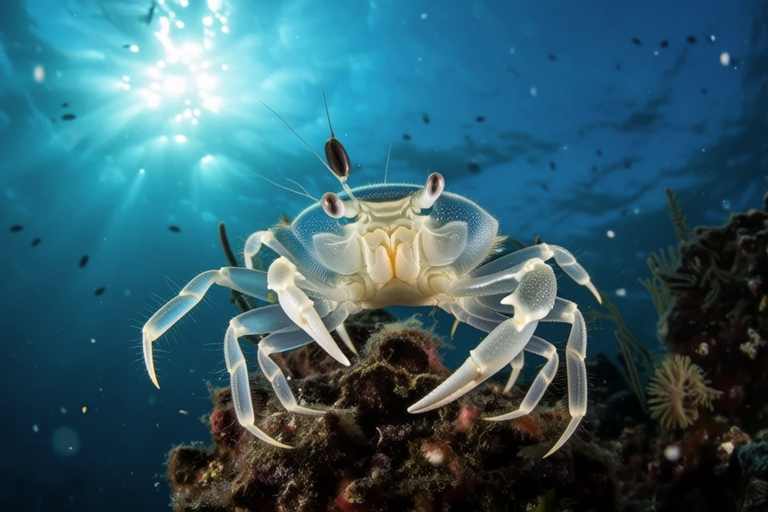
From Ocean Depths to Your Aquarium: Discovering the Pea Crab
The ocean, vast and mysterious, teems with countless species, each playing a unique role in maintaining the delicate balance of marine ecosystems. Among these species, the pea crab (Pinnotheres sp.) stands out as a fascinating example of symbiosis. This diminutive crustacean forms a unique partnership with various marine organisms, particularly sea anemones, clams, and sea cucumbers. In this article, we will explore the life of the pea crab, from its natural habitat to its potential as an aquarium inhabitant. We’ll delve into its physical characteristics, symbiotic relationships, dietary habits, and the challenges faced by aquarium enthusiasts who wish to house this intriguing creature.
The Unique Relationship Between Pea Crabs and Their Hosts
In nature, pea crabs have established a remarkable symbiotic relationship with sea anemones, clams, and sea cucumbers. These small crabs, measuring just a few millimeters to a couple of centimeters in length, live within the tissues of their hosts, often remaining hidden from predators. The relationship is mutually beneficial, with the pea crab gaining protection and access to food, while the host benefits from the crab’s ability to clean and defend against parasites.
The symbiosis is particularly pronounced in the case of clams. Pea crabs enter the mantle cavity of the clam, where they remain protected by the clam’s hard shell. In exchange for this shelter, the crabs assist the clam by feeding on detritus and other small particles that accumulate in the cavity. This cleaning process helps maintain the clam’s health and improves its ability to filter feed. Similarly, pea crabs living within sea cucumbers can contribute to the host’s well-being by consuming harmful bacteria and detritus.
Physical Characteristics of the Pea Crab
The pea crab is named for its small size, typically ranging from 5 to 10 millimeters in length. Its body is elongated and flattened, with soft, pliable exoskeletons that allow it to fit snugly within the crevices of its host. The crab’s coloration varies depending on its environment and host, ranging from pale yellow and white to greenish-brown. This camouflaging ability aids in blending in with its surroundings, making it less visible to predators.
The legs of the pea crab are adapted for life within its host. They are long and slender, allowing the crab to move around inside the clam’s mantle cavity or within the tissues of sea cucumbers. Additionally, pea crabs possess specialized appendages known as chelipeds, which are used for capturing prey and manipulating food particles. Despite their tiny size, these crabs are highly efficient at extracting nutrients from their environment.
Symbiotic Relationships and Mutual Benefits
The symbiotic relationship between pea crabs and their hosts is characterized by mutual benefits. For the pea crab, the primary advantage is protection from predators. By residing within the protective shell of a clam or the tissues of a sea cucumber, the crab is shielded from larger marine animals that might otherwise prey upon it. Additionally, the crab benefits from a constant supply of food, provided by the detritus and small organisms present within the host’s habitat.
For the host, the presence of pea crabs can also be advantageous. Clams, for instance, rely on their gills to filter water and extract food particles. However, over time, these gills can become clogged with detritus, reducing the clam’s efficiency in feeding. The pea crab helps alleviate this problem by consuming the detritus, thereby maintaining the clam’s gill function. Furthermore, pea crabs may act as a defense mechanism for their hosts. Some studies suggest that the presence of pea crabs can deter parasitic infections, thus enhancing the overall health of the host organism.
Diet and Adaptations
The diet of the pea crab primarily consists of organic matter, such as algae, detritus, and small planktonic organisms. Within the confines of its host, the crab uses its chelipeds to capture and consume these food sources. Interestingly, pea crabs have been observed to exhibit a preference for certain types of food, such as diatoms and other microalgae, which are abundant in their host environments.
To adapt to life within its host, the pea crab has developed several physiological adaptations. Its elongated body allows it to maneuver easily within the narrow spaces of the clam’s mantle cavity or the internal tissues of sea cucumbers. Additionally, the crab’s exoskeleton is relatively soft and flexible, enabling it to expand and contract as needed to fit within the host’s structure. This flexibility is crucial for the crab’s survival, as it must be able to adjust its body shape to avoid being squeezed or expelled by the host.
Housing Pea Crabs in Aquaria
For aquarium enthusiasts interested in housing pea crabs, there are several important considerations to keep in mind. First and foremost, it is essential to provide a suitable host for the crab. Clams are often the preferred choice, as they offer both protection and a source of food. When selecting a clam, ensure that it is healthy and free from disease. Additionally, consider the compatibility of the clam with other tank inhabitants, as some species may be more aggressive than others.
Environmental conditions play a critical role in the success of housing pea crabs. The water quality should be optimal, with parameters such as temperature, salinity, and pH levels carefully monitored. Pea crabs thrive in environments with stable water conditions, so regular maintenance and testing are necessary to ensure their well-being. Additionally, providing ample hiding spots and shelter within the tank can help the crabs feel secure and reduce stress.
When choosing tank mates for pea crabs, it is important to select species that are compatible and non-aggressive. Fish that are too large or predatory may pose a threat to the crabs, while smaller, peaceful fish can coexist harmoniously. It is also advisable to avoid introducing species that may compete with the crabs for food or space. Regular observation of the tank’s inhabitants is recommended to ensure that all species are thriving together.
Conservation Status and Significance
Pea crabs are generally considered to be of least concern in terms of conservation status, as they are widespread across many marine habitats. However, like many marine species, they face threats from human activities such as pollution, overfishing, and habitat destruction. The loss of key habitats, such as coral reefs and seagrass beds, can have a significant impact on the availability of suitable hosts for pea crabs.
The importance of pea crabs in marine ecosystems cannot be overstated. As part of the food web, they play a vital role in maintaining the balance of marine communities. By cleaning and maintaining the health of their hosts, pea crabs contribute to the overall well-being of the ecosystem. Additionally, their presence serves as an indicator of the health of their host species, offering valuable insights into the broader ecological dynamics of marine environments.
Efforts to conserve pea crabs and their habitats are crucial for ensuring the continued existence of these fascinating creatures. By supporting sustainable fishing practices, reducing pollution, and protecting marine ecosystems, we can help preserve the delicate balance of marine life, including the symbiotic relationships that pea crabs depend on.
Conclusion
The pea crab is a remarkable example of symbiosis in action, showcasing the intricate relationships that exist within marine ecosystems. From its small size and unique physical characteristics to its beneficial interactions with hosts, the pea crab offers a window into the complex world of marine biology. For aquarium enthusiasts, housing pea crabs presents both challenges and rewards, requiring careful consideration of environmental conditions and tank mates. Ultimately, understanding and appreciating the role of pea crabs in marine ecosystems can inspire greater efforts toward conservation and the preservation of our oceans.
