Tiny but Mighty: Exploring the Unique Life of Pea Crabs
Pea crabs, members of the family Pinnotheridae, are among the smallest and most intriguing creatures in the vast ocean. Despite their diminutive size, these tiny crustaceans play a significant role in marine ecosystems. This article delves into the biology, habitat, and behavior of pea crabs, focusing on their symbiotic relationships with other marine organisms, particularly oysters and sea cucumbers. We will also explore their role in the ecosystem, the challenges they face, and their unique adaptations.
The Biology of Pea Crabs
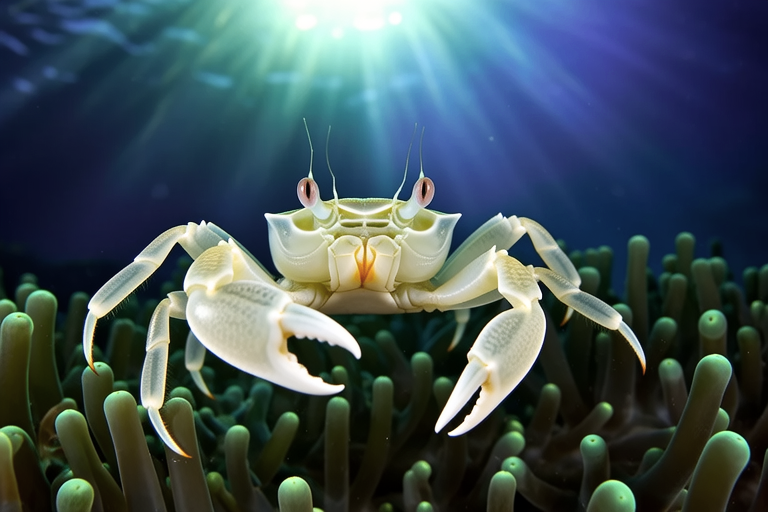
Pea crabs, named for their resemblance to the edible garden pea, typically range from 3 to 15 millimeters in length. They have a soft, oval-shaped carapace that is often transparent or semi-transparent, allowing for a view of their internal organs. Their coloration can vary widely, from pale yellow to brown, depending on their environment and diet. These crabs possess five pairs of legs, with the first pair modified into pincers used for feeding and defense. Their eyes are small and positioned on stalks, providing limited vision, which is compensated by their highly developed sense of touch and chemoreception.
The life cycle of pea crabs begins with the release of eggs by the female. The eggs hatch into free-swimming larvae, which eventually settle on a suitable host. Once settled, the larvae undergo a series of molts before reaching adulthood. Pea crabs are dioecious, meaning there are separate male and female individuals. Mating usually occurs within the host organism, and the females carry their eggs externally until they are ready to hatch.
Habitat and Distribution
Pea crabs are found in various marine environments around the world, from shallow coastal waters to deeper offshore areas. They are commonly associated with bivalve mollusks, such as oysters and clams, as well as echinoderms like sea cucumbers. These habitats provide both protection and a reliable food source for the pea crabs.
In the case of oysters, pea crabs often reside inside the mantle cavity, where they feed on the oyster’s hemolymph (blood) and mucus. Similarly, when living with sea cucumbers, pea crabs can be found within the body wall or attached to the respiratory trees. The specific habitat chosen by pea crabs depends on factors such as water temperature, salinity, and the availability of suitable hosts.
Symbiotic Relationships
The most remarkable aspect of pea crab biology is their symbiotic relationship with other marine organisms. These relationships are generally classified as parasitism, commensalism, or mutualism, depending on the benefits and costs to each partner involved.
With oysters, pea crabs are considered parasitic, as they consume some of the host’s resources without providing any direct benefit. However, this relationship can also be seen as commensalistic, as the pea crabs may help clean the oyster’s mantle cavity, potentially reducing the risk of infection. In some cases, the presence of pea crabs has been shown to enhance the growth rate of oysters, suggesting a mutualistic relationship.
The relationship between pea crabs and sea cucumbers is more complex. While pea crabs feed on the sea cucumber’s hemolymph and tissues, they also aid in cleaning the host’s respiratory structures, potentially improving gas exchange efficiency. This cleaning function can be particularly beneficial during periods of high environmental stress, such as pollution events or changes in water quality.
Behavior and Adaptations
Pea crabs have evolved several adaptations that allow them to thrive in their unique ecological niche. One of the most notable adaptations is their ability to withstand the high-pressure environments found within their hosts. This requires specialized gills and circulatory systems capable of maintaining adequate oxygen levels despite the cramped conditions.
Another key adaptation is their flattened body shape, which allows them to maneuver easily within the narrow spaces of their hosts. Additionally, pea crabs have developed a unique feeding strategy involving the use of their modified front legs to scrape and filter food particles from the host’s fluids.
The Role of Pea Crabs in the Ecosystem
Despite their small size, pea crabs play an important role in marine ecosystems. By feeding on the waste products of their hosts, they contribute to nutrient cycling and help maintain the health of their habitats. Furthermore, their interactions with oysters and sea cucumbers can influence the overall structure and function of these ecosystems.
In oyster reefs, for example, the presence of pea crabs can affect the distribution and abundance of other species, including predators and competitors. Similarly, the relationship between pea crabs and sea cucumbers can influence the dynamics of sediment transport and nutrient turnover in seafloor communities.
Challenges Faced by Pea Crabs
Like many marine species, pea crabs face numerous challenges in today’s changing world. Habitat destruction, pollution, and climate change all pose threats to their survival. Coastal development, dredging activities, and aquaculture practices can disrupt the delicate balance of their ecosystems, reducing the availability of suitable hosts and increasing competition for resources.
Additionally, the introduction of non-native species can alter the composition of local communities, potentially displacing native pea crabs or introducing new predators. Climate change-induced shifts in water temperature and chemistry can also impact pea crabs’ physiology and behavior, affecting their ability to find and maintain suitable hosts.
Conservation Efforts
To ensure the continued existence of pea crabs and the ecosystems they inhabit, it is essential to implement effective conservation strategies. Protecting and restoring critical habitats, such as oyster reefs and sea cucumber beds, is crucial for maintaining healthy populations of both hosts and symbionts.
Furthermore, promoting sustainable fishing practices and reducing pollution can help mitigate some of the threats faced by pea crabs. Educating the public about the importance of these tiny creatures and their roles in marine ecosystems can also foster greater appreciation and support for conservation efforts.
Conclusion
Tiny but mighty, pea crabs are fascinating creatures that have adapted to live within the confines of their hosts. Their unique biology, symbiotic relationships, and vital role in marine ecosystems make them worthy of attention and conservation. By understanding and protecting these tiny crustaceans, we can help preserve the intricate web of life that exists beneath the waves.
