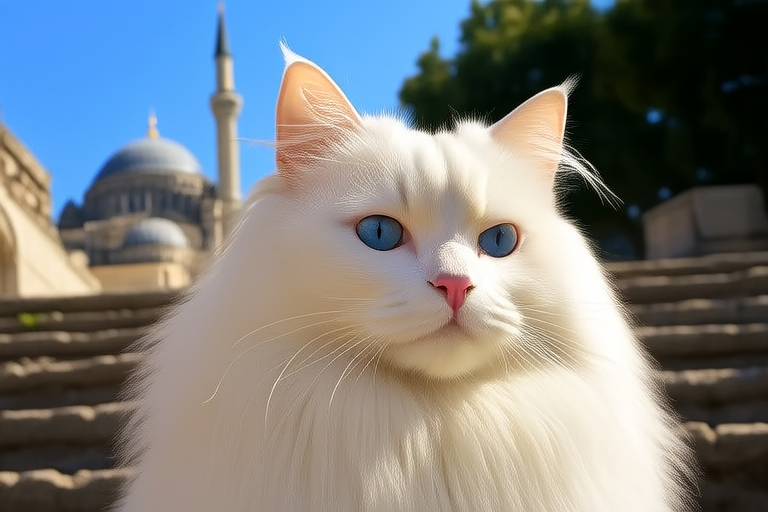
The Turkish Angora: From Anatolian Legend to Global Admiration
The Turkish Angora is a breed of cat renowned for its elegant appearance and regal bearing. Originating in the heart of Anatolia, this breed has a rich history deeply intertwined with the myths and legends of the region. This article explores the historical origins and mythical significance of the Turkish Angora, tracing its evolution from local legend to a globally admired breed. It also delves into the key characteristics that define the Turkish Angora, including physical traits and behavioral attributes. Notable mentions of Turkish Angoras in history, literature, or art that highlight their cultural importance will be discussed, as well as breeding practices that have preserved the breed’s distinct qualities. Finally, we will reflect on the current status and future prospects of the Turkish Angora in the global context of cat breeds.
Historical Origins and Mythical Significance
The Turkish Angora has been an integral part of Anatolian culture for centuries. Legends tell of the first Turkish Angoras descending from the goddess Hecate, who was said to have created them as companions for her worshippers. The breed’s name derives from Ankara, the capital city of Turkey, formerly known as Angora. Historical records indicate that these cats were already well-established in the region during the Ottoman Empire, where they were highly valued for their beauty and grace. They were often kept as pets by royalty and nobility, and their presence was considered a sign of wealth and prestige.
In addition to their role in Turkish mythology, Turkish Angoras played a significant part in the political and economic life of the region. During the 17th century, French and British diplomats stationed in Turkey began exporting the cats back to Europe. This marked the beginning of the breed’s global recognition and admiration. Over time, the Turkish Angora became synonymous with elegance and refinement, and it continues to hold a special place in the hearts of cat enthusiasts around the world.
Key Characteristics of the Turkish Angora
Physical Traits
The Turkish Angora is a medium-sized cat with a slender, graceful build. They have a long, silky coat that comes in a wide range of colors, including white, black, blue, red, and cream, as well as various patterns and tabby markings. One of the most distinctive features of the Turkish Angora is its large, expressive eyes, which can be blue, green, gold, or a combination of these colors. Their ears are large and alert, giving them an intelligent and curious expression.
Another notable feature of the Turkish Angora is its tail, which is long and bushy. This tail is often held high and curved over the back, adding to the cat’s elegant appearance. The Turkish Angora’s coat is fine and silky, requiring regular grooming to prevent matting and tangling. Despite their luxurious appearance, Turkish Angoras are relatively low-maintenance when it comes to grooming, and their coats do not shed excessively.
Behavioral Attributes
Turkish Angoras are known for their playful and affectionate nature. They are highly social animals that enjoy interacting with humans and other pets. These cats are intelligent and curious, often engaging in activities such as chasing toys or exploring new environments. They are also known for their vocalization, often meowing or chirping to communicate with their owners. Despite their playful demeanor, Turkish Angoras can be quite independent at times, preferring to spend time alone rather than constantly seeking attention.
One of the most striking aspects of the Turkish Angora’s behavior is its agility and athleticism. These cats are excellent climbers and jumpers, often reaching great heights to explore their surroundings. They are also known for their speed and agility, making them adept hunters. Their intelligence and problem-solving skills make them excellent companions for interactive play, and they often enjoy puzzle toys and games that challenge their minds.
Notable Mentions in History, Literature, and Art
The Turkish Angora has appeared in numerous works of art and literature throughout history, highlighting its cultural importance. In the 17th century, Turkish Angoras were often depicted in paintings and tapestries, symbolizing luxury and sophistication. One famous example is the “Angora Cat” painting by Jean-Baptiste Oudry, which showcases the breed’s elegant appearance and regal bearing.
In literature, Turkish Angoras have been featured in various stories and poems. For instance, the Turkish poet Nazim Hikmet wrote about the Turkish Angora in his poem “The White Cat,” describing its grace and beauty. Similarly, Turkish Angoras have been mentioned in several novels, including “The White Cat” by Elizabeth Marshall Thomas, which tells the story of a Turkish Angora named Whitefoot and her adventures in the wild.
Turkish Angoras have also been featured in films and television shows, further cementing their status as beloved companions. In the film “Cats,” based on the musical of the same name, a Turkish Angora named Mistoffelees plays a central role, showcasing the breed’s elegance and charm. Additionally, Turkish Angoras have appeared in various commercials and advertisements, promoting products ranging from cat food to luxury goods.
Breeding Practices and Preservation of Distinct Qualities
To preserve the distinct qualities of the Turkish Angora, careful breeding practices are essential. Breeders focus on maintaining the breed’s unique physical traits, such as its long, silky coat and large, expressive eyes. They also emphasize the breed’s behavioral attributes, such as its playful and affectionate nature. To ensure genetic diversity, breeders often crossbreed Turkish Angoras with other purebred cats, such as the Russian Blue or the Abyssinian, while still maintaining the breed’s signature characteristics.
Another important aspect of breeding practices is health screening. Breeders regularly test for genetic disorders that may affect the Turkish Angora, such as hypertrophic cardiomyopathy (HCM) and polycystic kidney disease (PKD). By identifying and addressing potential health issues early, breeders can help ensure the longevity and well-being of the Turkish Angora population.
Current Status and Future Prospects
Today, the Turkish Angora remains one of the most popular and sought-after cat breeds worldwide. Its elegant appearance and regal bearing continue to captivate cat enthusiasts, and the breed is recognized by major cat registries, including the International Cat Association (TICA) and the Cat Fanciers’ Association (CFA). In recent years, there has been a growing interest in preserving the breed’s distinct qualities through responsible breeding practices and genetic testing.
Looking to the future, the Turkish Angora faces both challenges and opportunities. On one hand, the breed’s popularity may lead to increased demand for Turkish Angoras, potentially putting pressure on breeding programs and contributing to unethical breeding practices. On the other hand, advances in genetics and veterinary medicine offer new tools for preserving the breed’s distinct qualities and addressing potential health issues.
To ensure the continued success and well-being of the Turkish Angora, it is essential to promote responsible breeding practices, genetic testing, and health screening. By working together, breeders, veterinarians, and cat enthusiasts can help ensure that the Turkish Angora remains a beloved and cherished companion for generations to come.
