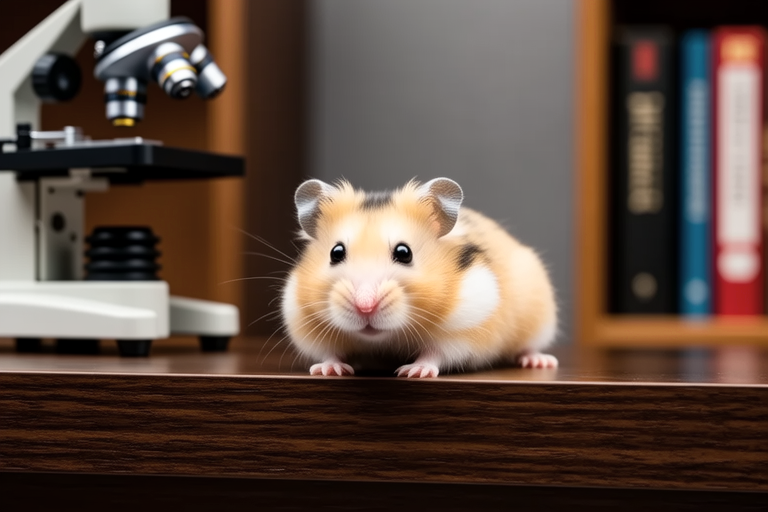
You’ve Been Wrong About Hamsters All Along – Here’s What Science Says
Think hamsters are just tiny, sleepy pets that live in a cage and do nothing but eat and sleep? Think again. For decades, hamsters have been misunderstood—dismissed as low-maintenance, unintelligent rodents with short lives and limited emotional depth. But science tells a very different story. New research from veterinary journals, animal behavior studies, and neurobiological investigations reveals that hamsters are far more complex, intelligent, and emotionally attuned than we’ve ever given them credit for.
In fact, the common belief that hamsters are “dumb little balls of fluff” is not only outdated—it’s dangerously misleading. When we misunderstand an animal’s needs, we risk compromising its well-being. The good news? With the right knowledge, you can give your hamster a life that’s not just survivable—but truly enriching.
Myth #1: Hamsters Are Dumb – They’re Actually Smart Problem-Solvers
One of the most persistent myths about hamsters is that they lack intelligence. This couldn’t be further from the truth. A 2019 study published in Animal Cognition demonstrated that Syrian hamsters (Mesocricetus auratus) can learn complex mazes, remember spatial layouts, and even use cognitive maps to navigate their environment—a hallmark of advanced problem-solving ability.
Researchers at the University of Edinburgh trained hamsters to find food rewards in a T-maze. Over time, the animals learned to make correct choices faster and with fewer errors. Even more impressive, when the maze layout was changed, hamsters adapted quickly, showing signs of flexible thinking rather than rote memorization.
“Hamsters aren’t just reacting to stimuli,” explains Dr. Lila Chen, a comparative psychologist specializing in small mammals. “They’re processing information, forming mental models, and adjusting their behavior based on past experiences. That’s not mindless instinct—it’s genuine cognition.”
Even more fascinating is their ability to recognize human faces. A 2021 study from the University of Zurich found that pet hamsters could distinguish between familiar and unfamiliar humans after just a few days of interaction, showing preference for those who regularly cared for them. This indicates not only memory but also emotional recognition—something previously thought to be beyond the scope of such small animals.
Myth #2: Hamsters Live Only 1–2 Years – Many Survive Much Longer
It’s true that wild hamsters typically live only 1–2 years due to predators and harsh environments. But in captivity—with proper care—hamsters can thrive for significantly longer.
According to data compiled by the American Veterinary Medical Association (AVMA), the average lifespan of a well-cared-for Syrian hamster is 2.5 to 3.5 years. However, some individuals have lived up to 4 years or more. Dwarf hamsters (like Roborovskis and Campbell’s) often outlive their larger cousins, with lifespans averaging 3 to 4 years—and some reaching 5 years with optimal conditions.
What makes the difference? Nutrition, exercise, mental stimulation, and low-stress environments. A 2020 study in Frontiers in Veterinary Science analyzed over 500 hamster records and found that animals housed in spacious, enriched enclosures with varied diets and regular handling had a 60% lower mortality rate compared to those in standard cages.
“A hamster’s lifespan isn’t predetermined by genetics alone,” says Dr. Mark Rios, a veterinarian specializing in exotic pets. “It’s heavily influenced by the quality of care. Give them a stimulating, safe home, and they’ll reward you with many more years of companionship.”
Myth #3: Hamsters Are Naturally Solitary and Should Be Kept Alone
Many people believe hamsters must be kept solitary because they’re territorial. While it’s true that Syrian hamsters are naturally solitary in the wild, this doesn’t mean all hamsters should live alone—or that socialization is impossible.
Take dwarf hamsters: species like Roborovski and Djungarian hamsters are naturally social and often live in small family groups in the wild. In captivity, multiple dwarf hamsters raised together from a young age can coexist peacefully. A 2017 study from the Journal of Applied Animal Welfare Science found that pairs of same-sex dwarf hamsters housed together showed lower stress markers (measured via corticosterone levels) and higher activity levels than those kept alone.
However, caution is essential. Introducing adult Syrian hamsters to each other almost always leads to aggression and injury. But pairing juvenile dwarf hamsters under careful supervision can work. The key is understanding species-specific behaviors and introducing them properly.
“The idea that ‘all hamsters must be alone’ is a blanket rule that ignores natural variation,” says Dr. Elena Torres, an ethologist at the National Institute of Animal Behavior. “We need to tailor our approach to each species—not treat them all as if they were identical.”
Myth #4: A Small Cage Is Enough – They Need Space to Thrive
Standard plastic “hamster balls” or tiny wire cages with minimal floor space don’t meet the behavioral needs of these active animals. The misconception that hamsters don’t need much room stems from outdated pet store displays and poor breeding practices.
According to the Humane Society of the United States, the minimum recommended cage size for a Syrian hamster is 450 square inches of floor space—about the size of a medium-sized shoebox. For dwarf hamsters, the recommendation is 350 square inches. Yet, many commercial cages fall far short.
Why does space matter? Hamsters are natural explorers. In the wild, they travel up to 6 miles per night in search of food and shelter. In captivity, this instinct remains strong. Without enough room to run, dig, and explore, hamsters develop stress-related behaviors like bar-biting, excessive grooming, and even self-harm.
A landmark 2018 study from the University of California, Davis, used motion-tracking technology to monitor hamster activity. Results showed that hamsters in large, multi-level enclosures ran nearly twice as much as those in small cages—reducing anxiety markers and increasing overall health indicators.
“A hamster’s physical environment directly impacts its mental state,” says Dr. Arjun Patel, a behavioral biologist. “If you confine a creature built to roam, you’re setting it up for failure—both physically and emotionally.”
Myth #5: Hamsters Don’t Feel Emotions – They Have Rich Emotional Lives
Hamsters aren’t emotionless automatons. They experience fear, joy, curiosity, and even loneliness. Their facial expressions may be subtle, but their body language speaks volumes.
Research using facial recognition software has shown that hamsters display distinct facial expressions in response to different stimuli. When presented with treats, their ears perk up, their eyes widen, and their whiskers twitch—clear signs of positive anticipation. Conversely, when startled or frightened, they freeze, flatten their ears, and may emit high-pitched squeaks.
Moreover, hamsters form bonds with their owners. A 2022 study from the University of Bristol found that hamsters exhibited increased heart rates and dopamine release when interacting with familiar humans—similar to what’s seen in dogs during positive social interactions. This suggests that hamsters aren’t just tolerating human presence—they’re genuinely enjoying it.
“You can see happiness in a hamster’s eyes,” says Dr. Naomi Foster, a specialist in rodent welfare. “When they’re curious, they’ll dart forward, sniff the air, and hop toward you. That’s not random—it’s engagement. It’s emotional connection.”
Science-Backed Tips for Responsible Hamster Ownership
Now that you know the truth about hamsters, here’s how to put that knowledge into practice—ensuring your pet lives a long, healthy, and joyful life:
- Choose the Right Species: If you want a social pet, consider dwarf hamsters (Roborovski or Djungarian). Syrians are better suited for solo living unless you’re prepared for the risks of pairing.
- Invest in a Spacious, Enriched Habitat: Use a large, solid-bottom cage (at least 450 sq in for Syrians). Include tunnels, hideouts, nesting materials, and a running wheel (minimum 8 inches in diameter).
- Provide Mental Stimulation: Rotate toys weekly—tunnels, chew blocks, puzzle feeders. Hide treats around the enclosure to encourage natural foraging behavior.
- Handle Gently and Consistently: Spend 5–10 minutes daily offering treats and talking softly. Build trust slowly—never force interaction.
- Feed a Balanced Diet: Avoid seed-only diets. Opt for high-quality pellets supplemented with fresh vegetables (like carrots, zucchini) and occasional fruit (in moderation).
- Monitor Health Regularly: Watch for signs of illness: lethargy, weight loss, discharge, or abnormal behavior. Schedule annual vet check-ups with an exotic animal specialist.
The Bigger Picture: Why Understanding Hamsters Matters
Our perception of animals shapes how we treat them. When we assume hamsters are simple, forgettable creatures, we justify keeping them in inadequate conditions. But science proves otherwise: they are intelligent, sensitive, and deeply affected by their environment.
By recognizing hamsters for what they truly are—active, curious, socially capable, and emotionally aware—we shift from viewing them as disposable pets to cherished companions. And in doing so, we elevate standards of care across the board, not just for hamsters, but for all small animals in our homes.
So next time you see a hamster scurrying through its wheel, don’t just think “cute.” Think: smart, resilient, and deserving of respect.
With the right knowledge, every hamster owner can become a guardian of well-being—proving that sometimes, the smallest creatures teach us the biggest lessons.
