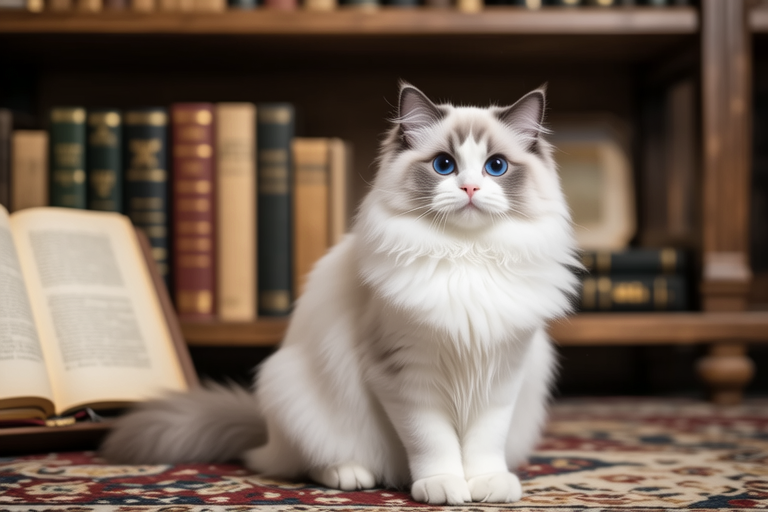
The Origins and Evolution of Ragdoll Cats
When it comes to feline companions, few breeds have captured the hearts of cat lovers quite like the Ragdoll. Known for their gentle demeanor, striking appearance, and tendency to go limp when picked up, these cats have become a favorite among pet owners worldwide. But how did this beloved breed come to be? This article explores the fascinating journey of the Ragdoll, from its Persian roots to its current status as one of the most popular cat breeds.
The Birth of a Breed: A Mysterious Beginning
The story of the Ragdoll begins in the early 1960s with a woman named Ann Baker, who lived in Riverside, California. Baker was a breeder of white long-haired cats, and she owned a Persian named Josephine, which she had acquired after a car accident. This incident would prove pivotal in the creation of the Ragdoll breed. Josephine, despite her injuries, continued to produce kittens, and one of these offspring, a male named Daddy Warbucks, became the foundation of the Ragdoll lineage. It was through the breeding of Josephine and Daddy Warbucks that the distinctive traits of the Ragdoll began to emerge.
Baker’s efforts to establish the Ragdoll breed were marked by both innovation and controversy. She introduced a unique approach to breeding, focusing on selective mating to enhance desirable traits such as temperament and physical attributes. However, her methods also included some unorthodox practices, including claims of genetic manipulation and secret breeding programs. These assertions, while never substantiated, added an air of mystery to the breed’s origins and contributed to Baker’s reputation as a somewhat enigmatic figure in the world of cat breeding.
Persian Influence and Early Development
The Persian cat, known for its luxurious coat and sweet disposition, has been a significant influence on the Ragdoll breed. The Persian’s soft, dense fur and calm demeanor provided a solid foundation for the development of the Ragdoll. Josephine, the Persian at the center of the breed’s creation, carried genes that contributed to the Ragdoll’s characteristic long, silky coat and gentle nature. The Persian’s influence extended beyond just physical traits; it also shaped the breed’s temperament, fostering a cat that is known for its affectionate and laid-back personality.
In addition to the Persian, other breeds played a role in the early development of the Ragdoll. American Shorthairs, Burmese, and possibly Abyssinians were all part of the mix. Each breed brought something unique to the table, helping to refine the Ragdoll’s appearance and temperament. The American Shorthair’s robust health and adaptability, the Burmese’s expressive eyes and playful nature, and the Abyssinian’s athletic build and high energy all contributed to the diverse gene pool from which the Ragdoll emerged.
Defining Characteristics
One of the most distinctive features of the Ragdoll is its semi-long, plush coat, which requires regular grooming to maintain its lustrous appearance. The breed’s coat comes in various colors, including seal, blue, chocolate, lilac, red, and cream, often paired with points on the ears, face, tail, and paws. Their large, expressive blue eyes and muscular bodies further enhance their charm. Ragdolls are medium to large-sized cats, with males typically weighing between 12 and 20 pounds and females ranging from 8 to 15 pounds.
Perhaps the most endearing trait of the Ragdoll is its tendency to go limp when held, a behavior that gives the breed its name. This docile reaction is often attributed to the breed’s genetic makeup, particularly the presence of the dominant white gene, which may affect the cat’s nervous system. While this trait can make handling easier, it also underscores the breed’s gentle and trusting nature. Ragdolls are known for their affectionate behavior, often following their owners around the house and seeking out human interaction. They are also highly adaptable, making them suitable for a variety of living situations, from apartments to larger homes.
Transitioning from Obscurity to Popularity
Despite their unique qualities, Ragdolls remained relatively obscure for several years after their inception. This changed in the late 1970s when a group of breeders, led by Denny and Laura Dayton, decided to formalize the breed. They founded the International Ragdoll Cat Association (IRCA) in 1975, establishing standards and guidelines for breeding and showing. This move helped to legitimize the breed and attract more attention from cat enthusiasts.
The Daytons’ efforts were instrumental in elevating the Ragdoll’s profile. They organized shows, wrote articles, and promoted the breed through various channels. Their dedication paid off, and by the 1980s, the Ragdoll had gained recognition from major cat registries, including the Cat Fanciers’ Association (CFA). In 1994, the CFA fully recognized the Ragdoll, cementing its place among established cat breeds.
The breed’s rise to popularity can also be attributed to its appeal to cat lovers. Ragdolls are known for their friendly and easygoing personalities, making them ideal companions for families and individuals alike. Their affectionate nature and low-maintenance care requirements have made them a top choice for many pet owners. Additionally, the breed’s striking appearance and distinctive traits have captured the imagination of cat enthusiasts, contributing to its growing fan base.
Challenges and Controversies
The path to recognition and acceptance was not without challenges. One of the most significant controversies surrounding the Ragdoll breed involved Ann Baker’s claims about genetic manipulation. Baker maintained that she had developed a special strain of Ragdolls through a secret breeding program, which she referred to as “Ragamuffins.” These claims were met with skepticism by the cat breeding community, leading to a split within the breed. Some breeders continued to follow Baker’s methods and standards, while others sought to distance themselves from her practices and focus on traditional breeding techniques.
This division resulted in the formation of separate organizations, each with its own set of standards and goals. The International Ragdoll Cat Association (IRCA), founded by Baker, continued to promote her version of the breed, while the Ragdoll Kitten Fanciers (RKF) and the International Ragdoll Cat Society (IRCS) focused on more conventional breeding practices. Despite these differences, both factions worked to advance the breed and ensure its future success.
Modern Favorite Among Cat Enthusiasts
Today, the Ragdoll is a beloved breed, cherished for its unique combination of beauty, intelligence, and affection. The breed’s popularity continues to grow, thanks in part to its appealing characteristics and the efforts of dedicated breeders. Ragdolls are now found in households across the globe, bringing joy and companionship to countless families.
As the breed has evolved, so too has the understanding of its care and maintenance. Regular grooming is essential to keep the Ragdoll’s coat in top condition, while proper nutrition and healthcare are vital for maintaining its overall well-being. Responsible breeding practices have also played a crucial role in ensuring the health and longevity of the breed. By adhering to strict breeding standards and prioritizing the welfare of the cats, breeders have helped to preserve the Ragdoll’s distinctive traits and ensure its continued success.
The future of the Ragdoll looks bright, with ongoing efforts to improve the breed and expand its reach. As more people discover the joys of owning a Ragdoll, the breed is likely to remain a favorite among cat enthusiasts for generations to come.
