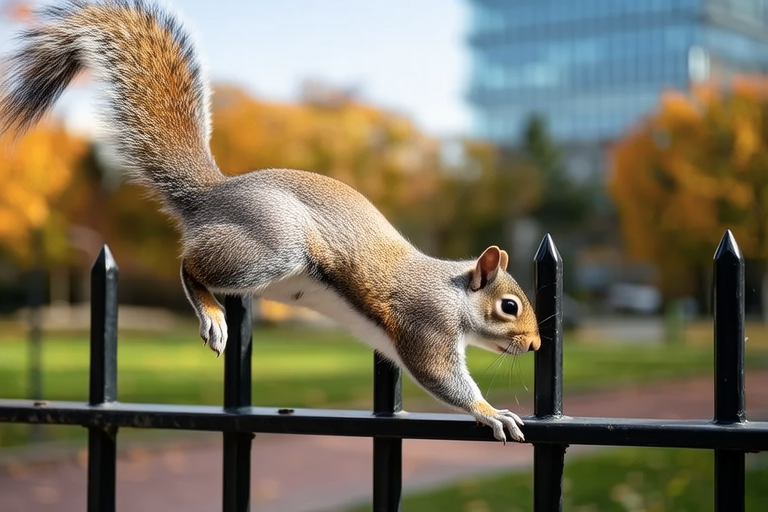
From Park To Playground: How Urban Squirrels Thrive Amongst Concrete And Steel
In bustling cities around the world, a familiar sight greets us as we walk through parks or along busy streets – the agile, bushy-tailed urban squirrel. These small mammals have adapted remarkably well to life among concrete and steel, thriving in environments that might seem inhospitable at first glance. From their surprising ability to find food in urban settings to their clever strategies for seeking shelter, urban squirrels offer a fascinating glimpse into the resilience of nature.
The Urban Adaptation of Squirrels
Squirrels, originally woodland creatures, have found a new home in our cities. Their adaptability is one of the key factors in their success. While many species struggle in urban environments, urban squirrels have managed to carve out niches for themselves, utilizing resources that are abundant in human-dominated landscapes. This adaptation is not just a matter of convenience but a testament to their evolutionary prowess.
One of the most notable examples of this adaptation is the eastern gray squirrel (Sciurus carolinensis), which has become a common sight in North American cities. These squirrels were introduced to several European cities in the 19th century and have since thrived, becoming integral parts of urban ecosystems. The red squirrel (Sciurus vulgaris) also finds its way into urban areas, albeit less frequently than its gray counterpart.
Food Sourcing in Urban Environments
Urban squirrels have developed a diverse diet that includes nuts, seeds, fruits, fungi, and even insects. However, in cities, their diet expands to include human-provided foods such as birdseed, pet food, and discarded snacks. Studies have shown that urban squirrels are adept at scavenging from picnic areas, gardens, and even trash bins. This behavior not only ensures a steady food supply but also introduces them to a variety of nutrients that may not be available in natural habitats.
Research conducted by Dr. Nils Chr. Stenseth from the University of Oslo indicates that urban squirrels exhibit higher levels of stress hormones compared to their rural counterparts. Despite this, they are more successful in reproducing, possibly due to the abundance of food sources in cities. This suggests that while urban living presents challenges, it also offers significant rewards in terms of resource availability.
