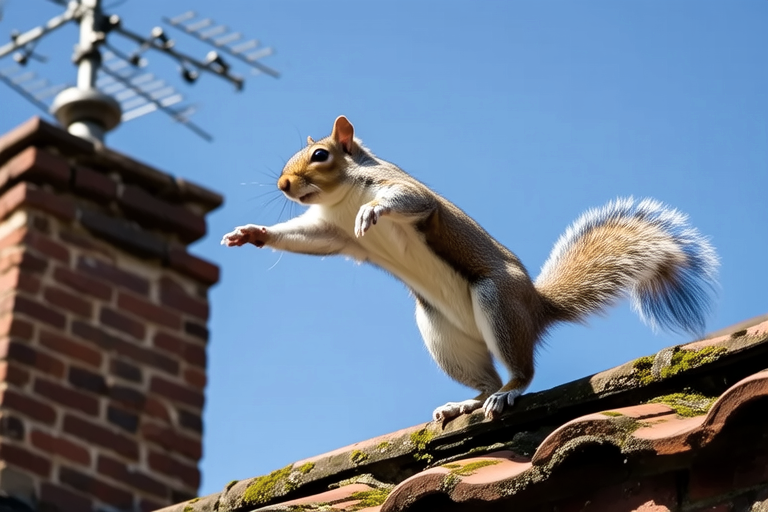
Meet the Ultimate Acrobats: How Squirrels Rule Urban Rooftops
In the bustling heart of cities, where concrete jungles rise high into the sky, a small but mighty creature reigns supreme—squirrels. These agile acrobats have adapted to urban life with remarkable ease, turning rooftops into playgrounds and cityscapes into vast territories. Their ability to navigate complex environments, leap from building to building, and scavenge for food in the most unexpected places has earned them a special place in the hearts of city dwellers and scientists alike.
The Agile Architects of Urban Rooftops
Squirrels are masters of movement, designed by nature to be swift and nimble. With powerful hind legs and long, bushy tails that act as rudders, they can leap great distances between buildings, trees, and even utility wires. Their paws are equipped with sharp claws that allow them to grip surfaces with ease, making it possible for them to scale walls and maneuver across narrow ledges. In urban environments, where verticality reigns, these skills are invaluable.
One of the most impressive feats of squirrel acrobatics is their ability to make precise landings. They can jump from heights of up to 20 feet and land gracefully on narrow perches, often without a single misstep. This agility is due to their excellent sense of balance and coordination, honed over millions of years of evolution. Their bodies are light and compact, reducing the risk of injury during falls and jumps.
Diet and Survival Strategies
In cities, squirrels face a different set of challenges compared to their forest-dwelling counterparts. While natural habitats provide an abundance of nuts, seeds, and fruits, urban environments require more resourcefulness. Squirrels have adapted their diets to include a wide variety of human-provided foods, such as birdseed, pet food, and discarded snacks. They are opportunistic feeders, scavenging wherever they can find sustenance.
Despite this flexibility, squirrels still rely heavily on their natural instincts. They are known to bury nuts and seeds in the ground for later consumption, a behavior called caching. This practice ensures a steady supply of food throughout the year, especially during winter months when natural resources may be scarce. In urban settings, squirrels have found creative ways to cache their food, hiding it under rocks, behind walls, or in tree cavities.
Survival in cities also requires a keen awareness of potential threats. Squirrels are constantly on the lookout for predators, which in urban areas include cats, dogs, and occasionally birds of prey. Their ability to blend into their surroundings and their quick reflexes help them avoid danger. They are also adept at recognizing human activity and can become quite bold around people, especially if they associate humans with food.
Navigating the Urban Landscape
Urban environments present a unique set of challenges and opportunities for squirrels. Rooftops serve as both safe havens and hunting grounds. These elevated spaces offer a vantage point from which squirrels can survey their territory and plan their next move. They use their sharp eyesight to spot potential prey, such as insects or smaller rodents, and their keen hearing to detect approaching danger.
Rooftops are also crucial for communication. Squirrels use a variety of vocalizations and body language to convey messages to one another. They can warn others of nearby predators, signal the presence of food, or establish territorial boundaries. Their chirps, chatters, and tail flicks are all part of a complex system of communication that helps them thrive in crowded urban spaces.
City life has also forced squirrels to become adept at using human-made structures. Utility wires, fences, and balconies serve as pathways and resting spots. Squirrels have been observed running along power lines with ease, using their tails for balance. They are particularly skilled at navigating the intricate web of pipes and cables that crisscross many rooftops. Their ability to exploit these structures allows them to cover large distances quickly and efficiently.
The Unique Challenges of City Living
While urban environments offer squirrels new opportunities, they also come with unique challenges. One of the biggest hurdles is the constant threat of traffic. Squirrels must cross busy streets to reach different parts of the city, and many fall victim to vehicles each year. To mitigate this risk, some cities have implemented wildlife crossings, such as underpasses and overpasses, to help animals safely navigate through urban areas.
Pollution is another concern. The air and water in cities can be contaminated with chemicals and pollutants, which can affect squirrels’ health. However, studies have shown that squirrels are relatively resilient to these environmental stressors. Their ability to adapt their diets and find clean water sources helps them survive in polluted environments.
Human interaction also poses challenges. Squirrels are often seen as pests, and some people attempt to deter them from entering their homes or gardens. However, many others view them as charming and entertaining creatures, providing a much-needed dose of wildlife in the midst of concrete and steel. Conservation efforts are underway in many cities to protect squirrels and other urban wildlife, ensuring that they have access to safe and healthy habitats.
A Captivating Presence in Our Cities
Despite the challenges they face, squirrels remain a beloved fixture in our cities. Their playful antics and acrobatic skills never fail to captivate onlookers. Whether it’s watching them chase each other across rooftops or observing them carefully gather nuts for winter, squirrels bring a touch of nature into our daily lives.
Scientists continue to study squirrels in urban environments, seeking to understand their behavior and adaptability. By learning more about how squirrels thrive in cities, we can better design urban spaces that support wildlife. This knowledge can also inform conservation efforts, helping to ensure that squirrels and other urban dwellers have the resources they need to survive and flourish.
As cities continue to grow and evolve, so too will the role of squirrels in urban ecosystems. Their ability to adapt and thrive in diverse environments makes them a symbol of resilience and resourcefulness. In a world increasingly dominated by human development, the presence of squirrels serves as a reminder of the delicate balance between nature and civilization.
