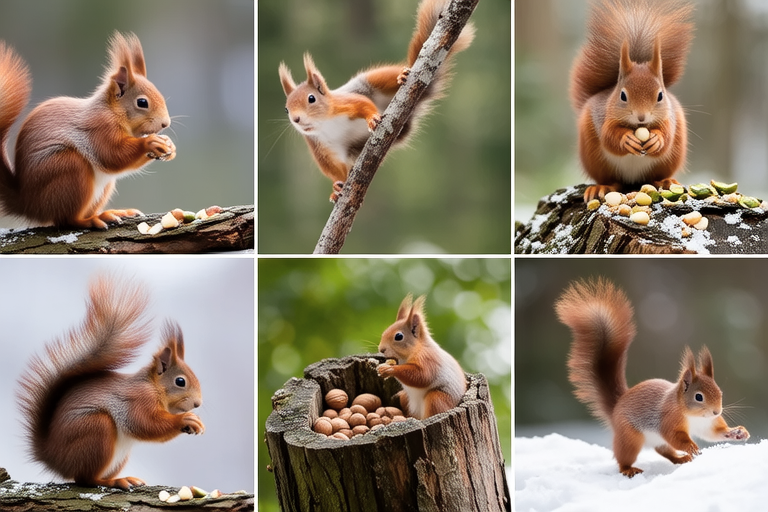
Top 7 Ingenious Survival Tactics Used by Squirrels in the Wild
In the vast and often unforgiving world of nature, few animals exhibit as much adaptability and resourcefulness as squirrels. These small, agile creatures have developed an array of survival tactics that enable them to thrive in diverse environments, from bustling city parks to dense forests. This article delves into the top seven ingenious survival tactics used by squirrels in the wild, providing insights into their remarkable abilities and the science behind their success.
1. Hoarding: The Art of Stockpiling
One of the most well-known survival tactics of squirrels is their ability to hoard food. This behavior is particularly crucial during winter months when food sources become scarce. Squirrels employ various techniques to store their food, such as burying nuts and seeds in the ground or hiding them in tree cavities.
Scientifically, this practice is known as scatter hoarding. It’s a strategy that reduces competition among individuals and ensures a steady supply of food throughout the year. For instance, a red squirrel might bury hundreds of pine cones in different locations within its territory. By doing so, it minimizes the risk of losing all its reserves to a single predator or environmental disaster.
2. Acrobatic Agility: Navigating the Canopy
Squirrels are renowned for their acrobatic skills, which they use to navigate the forest canopy with ease. Their strong hind legs and flexible bodies allow them to leap impressive distances between branches, sometimes covering gaps as wide as four meters. This agility is not just about speed; it’s also about precision.
Biologists have observed that squirrels can adjust their body posture mid-air to correct their trajectory, ensuring they land safely on their target. This skill is particularly useful when escaping predators like hawks or foxes. For example, a gray squirrel might leap from one tree to another, twisting its body to avoid a swooping bird of prey.
3. Camouflage: Blending into the Background
While squirrels are generally quite visible due to their bushy tails and bold coloring, they have evolved several ways to blend into their surroundings. Their fur coloration varies depending on the season and habitat, helping them stay hidden from both predators and competitors.
In autumn, many species develop darker coats, which help them merge with the earth and fallen leaves. Additionally, squirrels often build nests high up in trees, camouflaging them with moss and lichen to make them less conspicuous. This camouflage not only aids in predator avoidance but also assists in reducing stress and energy expenditure.
4. Communication: A Language of Signals
Squirrels are highly communicative animals, using vocalizations and body language to convey messages to other squirrels. They produce a variety of sounds, from sharp barks to soft chirps, each serving a specific purpose. For instance, a series of rapid barks might indicate the presence of a predator, prompting nearby squirrels to seek cover.
Research has shown that squirrels can also interpret the calls of other species, such as birds, to detect potential threats. This inter-species communication network helps them stay informed about their environment and react quickly to changing conditions. For example, if a jay bird starts warning calls, squirrels will likely stop foraging and look for a safe place to hide.
5. Diverse Diet: Flexibility in Feeding
Squirrels are opportunistic feeders, meaning they eat a wide range of foods based on what’s available. Their diet typically includes nuts, seeds, fruits, fungi, and occasionally insects. This dietary flexibility allows them to survive in environments where food sources may be limited or unpredictable.
For instance, during times of drought, when plant-based foods are scarce, squirrels may turn to insectivory, supplementing their diet with grubs and larvae. This adaptability is crucial for their survival, especially in urban areas where human activities can disrupt natural food supplies. In cities, squirrels have been observed scavenging from bird feeders and even raiding garbage cans.
6. Nest Building: Creating Safe Havens
Nest building is another vital survival tactic employed by squirrels. They construct two types of nests: dreys and dens. Dreys are built high in trees and are typically made from twigs, leaves, and moss. These nests provide shelter from harsh weather conditions and protection from ground predators.
Dens, on the other hand, are usually found in hollow tree trunks or rock crevices. Both types of nests serve as safe havens for squirrels, especially during the colder months. The insulation provided by the nest materials helps maintain a stable internal temperature, ensuring the squirrels remain warm and comfortable.
7. Problem Solving: Using Tools and Intelligence
Perhaps one of the most fascinating aspects of squirrel behavior is their problem-solving abilities. Squirrels have been observed using tools and demonstrating intelligence in various situations. For example, they may use sticks to dig out buried nuts or manipulate objects to reach inaccessible food sources.
Some studies have shown that squirrels can remember the location of their hidden caches for extended periods, demonstrating excellent spatial memory. This ability is crucial for retrieving stored food during lean times. Additionally, squirrels have been seen using their paws to open complex containers, showcasing their dexterity and intelligence.
These problem-solving skills are thought to be linked to their large brains relative to body size. This cognitive capacity allows squirrels to adapt to new challenges and find innovative solutions to everyday problems.
Conclusion
The survival tactics employed by squirrels in the wild are a testament to their adaptability and resourcefulness. From hoarding food to navigating the canopy, these small mammals have developed a wide range of strategies that ensure their survival in diverse environments. Whether through physical agility, clever communication, or problem-solving skills, squirrels continue to captivate us with their ingenuity.
Understanding these tactics not only enhances our appreciation for these fascinating creatures but also provides valuable insights into the mechanisms of survival in nature. As we continue to study squirrels and other wildlife, we gain a deeper understanding of the intricate balance that exists in the natural world.
