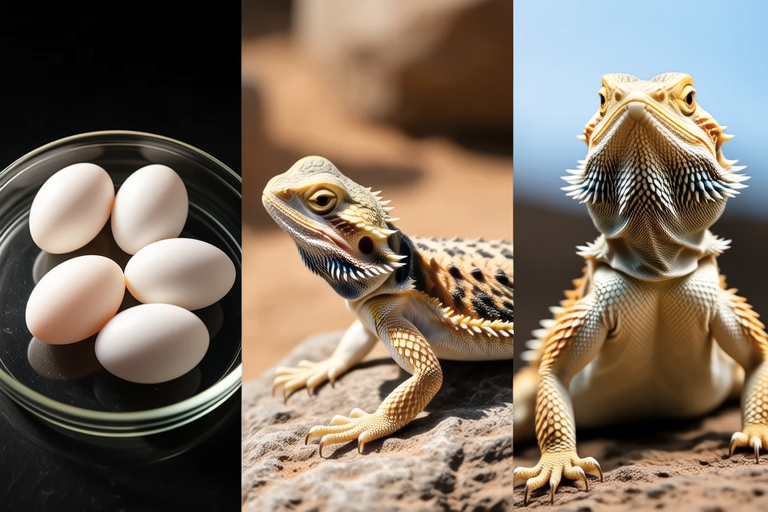
From Egg to Adult: The Complete Lifecycle of a Bearded Dragon
The lifecycle of a bearded dragon is an intricate journey from egg to adult, encompassing various stages of growth, development, and adaptation. Understanding this lifecycle can help owners provide the best possible care for these reptiles throughout their lives. This article will explore the entire lifecycle, from mating and egg-laying to adulthood, offering insights into each stage’s unique requirements.
Mating and Egg-Laying
Bearded dragons reach sexual maturity around 8 to 18 months of age. Mating typically occurs during the spring and summer seasons when temperatures are favorable. For successful fertilization, male and female bearded dragons need to be housed together in an environment that mimics their natural habitat. A spacious vivarium with ample space for both dragons to interact is essential. Additionally, the enclosure should have a temperature gradient, ranging from 80°F (27°C) on the cooler side to 95°F (35°C) on the warmer side. This temperature range encourages natural behaviors and supports healthy reproductive processes.
Females lay eggs approximately 4 to 6 weeks after mating. To ensure successful egg-laying, females require a nesting box filled with moist sand or vermiculite. The substrate should be damp enough to hold its shape when squeezed but not so wet that water drips out. This nesting material provides the necessary humidity for the eggs to develop properly. Owners should monitor the female closely during this period, as stress or inadequate conditions can lead to egg-binding, a potentially life-threatening condition where the eggs cannot be laid.
Egg Incubation
Once the eggs are laid, they must be carefully removed from the nesting box and placed in an incubator. Incubators maintain a constant temperature and humidity level, crucial for the embryos’ development. Bearded dragon eggs typically incubate at 82°F to 88°F (28°C to 31°C). The optimal temperature for incubation depends on the desired sex ratio; higher temperatures tend to produce more males, while lower temperatures favor females. Maintaining the correct humidity level, usually between 70% and 80%, is equally important. This can be achieved by misting the incubation medium regularly.
Incubation lasts approximately 55 to 75 days, depending on temperature and individual egg health. During this time, it’s essential to monitor the eggs closely for signs of mold or bacterial growth, which can jeopardize the developing embryos. Regularly checking the incubator’s settings ensures that the eggs remain in optimal conditions until hatching.
Hatching Stage
When the hatchlings emerge, they are tiny replicas of adult bearded dragons, measuring about 3 to 4 inches (7.6 to 10 cm) in length. At this stage, they are highly vulnerable and require careful handling. Owners should prepare a quarantine tank with a warm basking spot and shallow water dish for hydration. The temperature gradient should be maintained at around 85°F to 95°F (29°C to 35°C), ensuring that the hatchlings can regulate their body temperature effectively.
Common challenges during the hatching stage include dehydration and difficulty shedding. Hatchlings may struggle to find food immediately after hatching, so owners should offer small insects like pinhead crickets or dubia roaches. Providing calcium supplements in the form of dusted insects can also prevent metabolic bone disease. Additionally, regular misting helps keep the environment humid and aids in shedding.
Juvenile Stages
Juveniles experience rapid growth during their first year of life. They undergo several growth spurts, particularly noticeable in their limbs and tail. Their diet should consist mainly of small insects, such as mealworms, crickets, and dubia roaches, supplemented with leafy greens like collard greens and mustard greens. As they grow, the proportion of vegetables in their diet can gradually increase, but insects should remain the primary source of protein.
Behaviorally, juveniles are curious and active, often exploring their surroundings. They may exhibit territorial behavior, especially if housed with other juveniles. It’s important to provide plenty of hiding spots and climbing structures to reduce stress and promote natural behaviors. Juveniles should be handled gently to avoid causing injury or stress. Gradually increasing handling time helps them become accustomed to human interaction.
Adulthood
Adult bearded dragons typically reach a length of 16 to 24 inches (40 to 60 cm) and weigh between 12 and 24 ounces (340 to 680 grams). Their temperament varies, but most adults are calm and docile, making them popular pets. Some may display aggressive behaviors, especially during breeding season or when feeling threatened. Providing a secure environment with appropriate hiding spots can help alleviate stress and encourage positive interactions.
Adult maintenance involves maintaining a balanced diet rich in protein and calcium. Insects should still form the core of their diet, complemented by leafy greens and occasional fruits. Owners should offer a calcium supplement twice weekly to prevent deficiencies. Additionally, regular UVB lighting is crucial for vitamin D synthesis and overall health. The vivarium should be cleaned weekly, and any uneaten food should be removed promptly to prevent bacterial growth.
Adult bearded dragons benefit from regular veterinary check-ups to monitor their health and address any potential issues early. Owners should also be aware of common health problems, such as impaction, respiratory infections, and metabolic bone disease, and take proactive measures to prevent them.
Conclusion
The lifecycle of a bearded dragon is a fascinating journey that requires attentive care at every stage. From the mating process and egg-laying to adulthood, understanding and meeting each phase’s specific needs ensures the well-being and longevity of these remarkable reptiles. By providing a nurturing environment and addressing each stage’s unique challenges, owners can enjoy the companionship of a healthy, thriving bearded dragon for many years.
